Slow Travel with a Motorhome: Plan a 3-Day 2-Night Trip with Route, Rest Stops, and Budget
Nattamon KhonngamPublished on: October 23, 202610 min read4 views
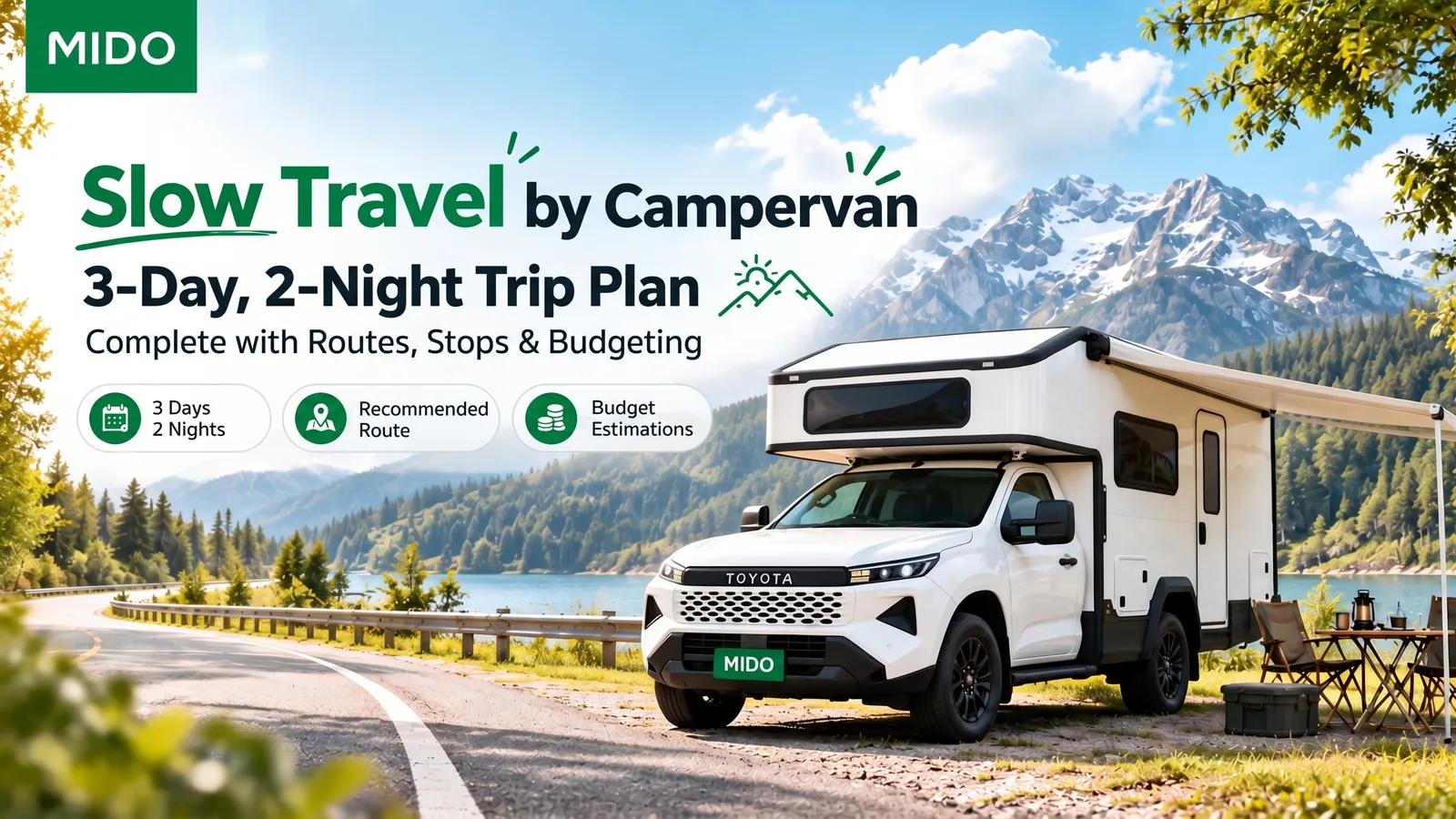
If you're starting to feel tired of cramped itineraries, waking up early to rush through all the checkpoints, or spending more time on the road than absorbing the atmosphere around you, perhaps this is the perfect time to shift your vacation style into the world of "Slow Travel" or leisurely travel that emphasizes the quality of time over the number of places.
And one of the best ways to perfectly answer this style of travel is driving a motorhome (Motorhome or Campervan) because a motorhome is like a vehicle and accommodation in one, giving you complete freedom to set your own pace, without worrying about check-in times at accommodations, you can stop for coffee by the roadside whenever you want, and wake up in nature such as 20 Khao Yai attractions up close. This article will take you on a journey to discover Slow Travel through motorhomes, complete with a 3-day 2-night travel plan, recommended routes, overnight parking spots, and how to calculate a budget that's actually applicable.
What is Slow Travel and why is a motorhome suitable for unhurried travel?
The meaning and heart of Slow Travel
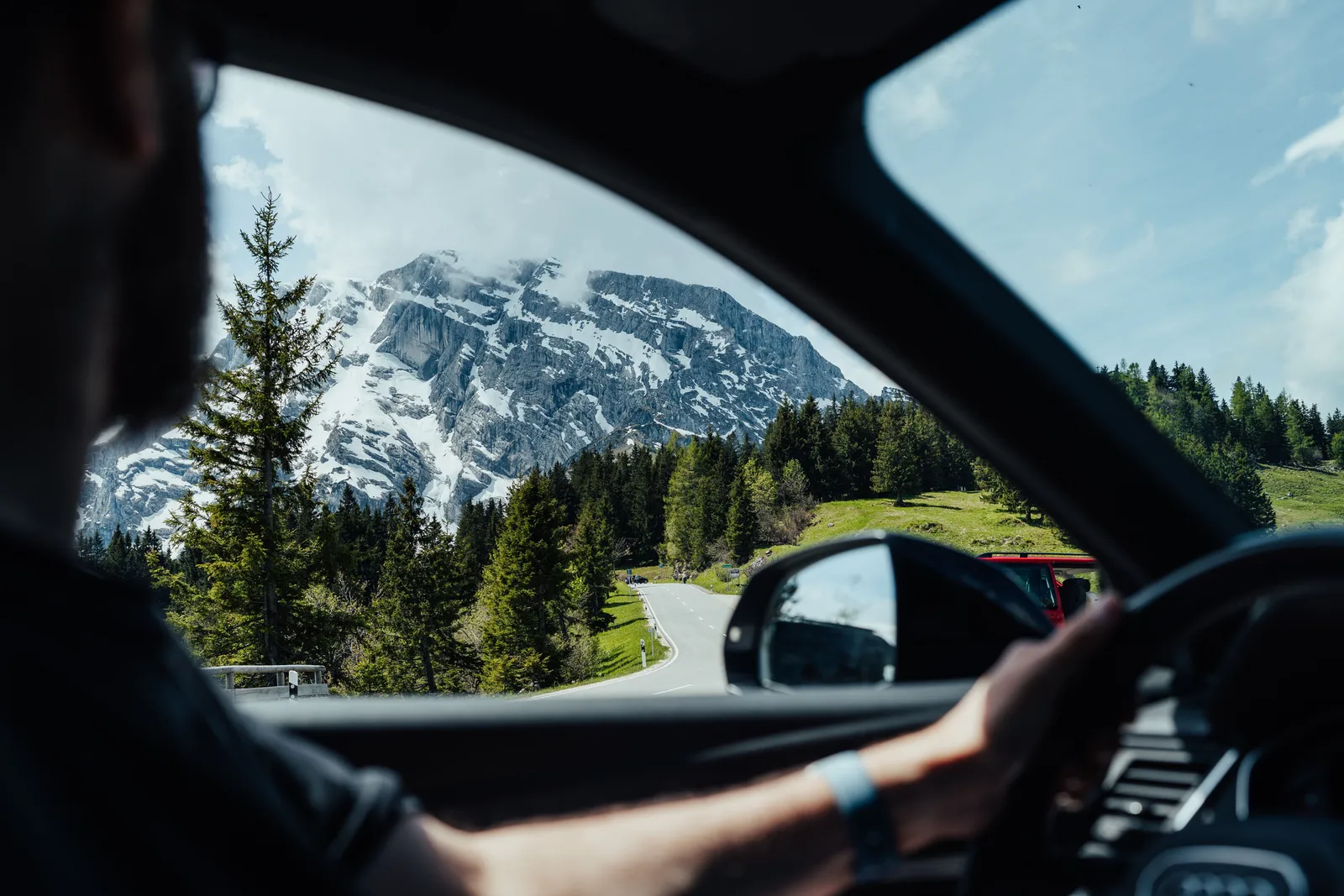
Slow Travel is not just about driving slowly, but is a concept and "philosophy" of travel that emphasizes deep connections with people, culture, food, and nature in the local area. The key is to reduce the rush, let yourself fully absorb the atmosphere in front of you, give importance to the "journey" as much as the "destination," instead of visiting ten tourist attractions in one day, Slow Travel would choose to spend a full day relaxing in a small community, sitting reading a book by a stream, or cooking for yourself with local ingredients.
Advantages of traveling by motorhome compared to regular travel
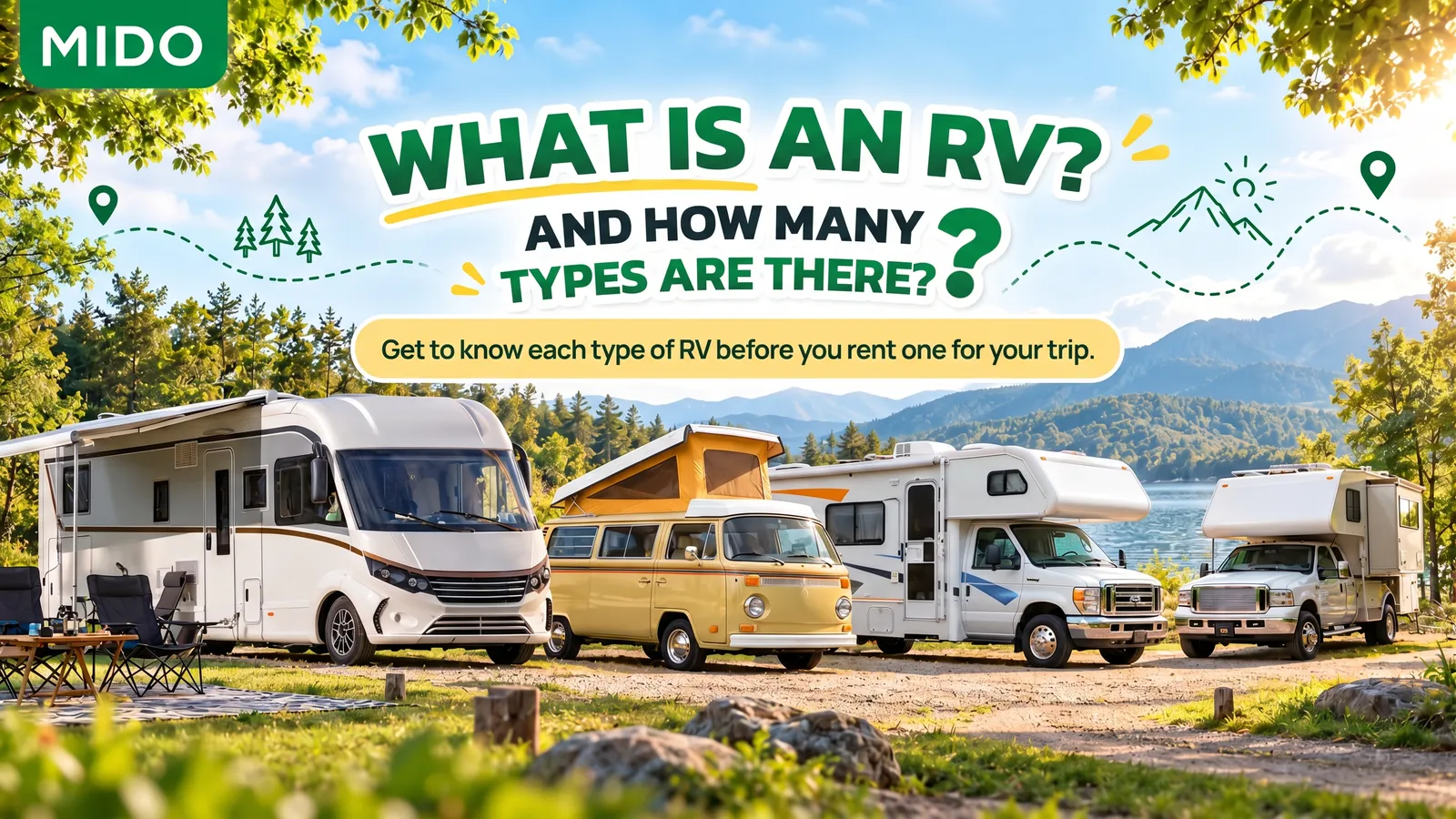
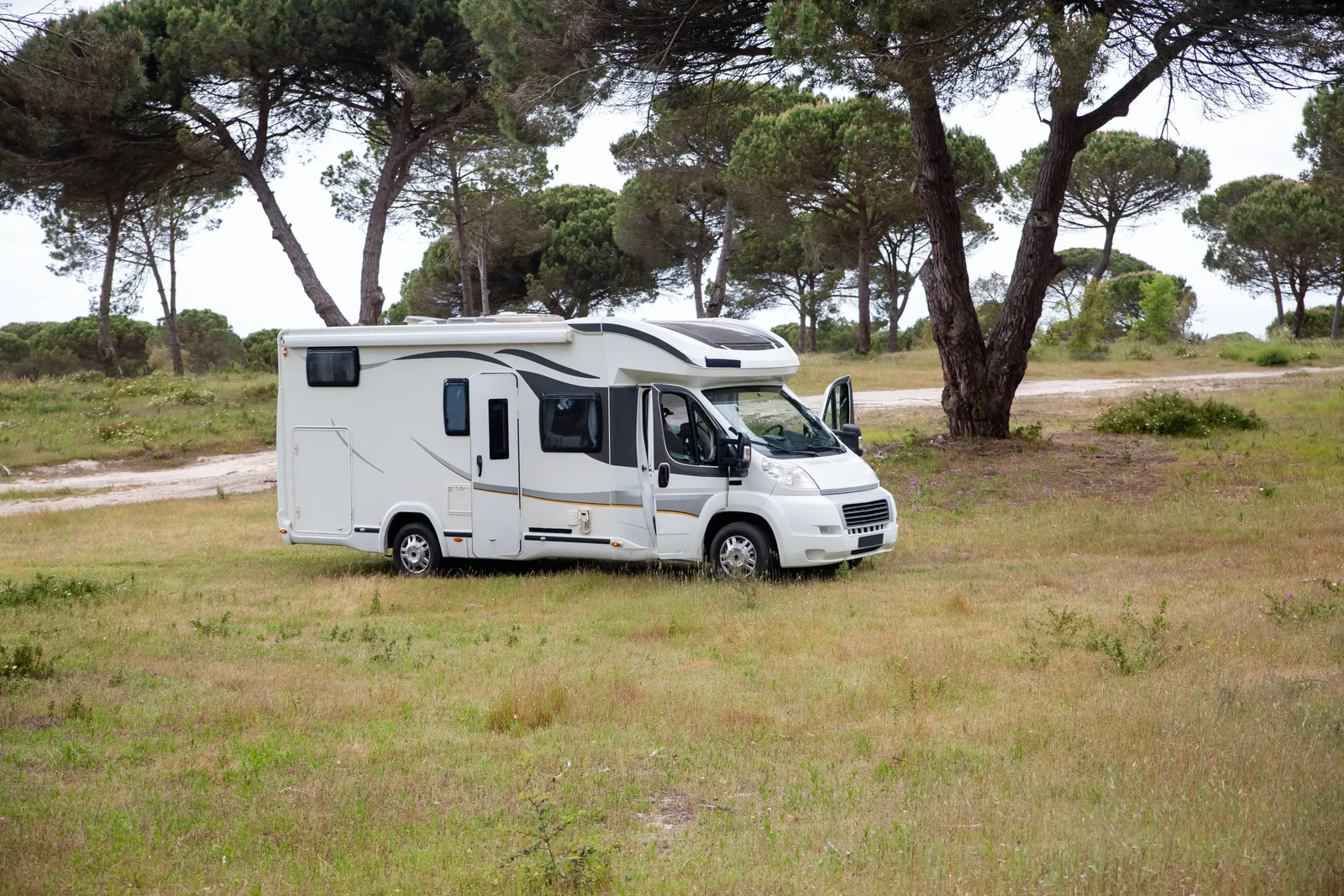
Combining the Slow Travel concept with a vehicle like a "motorhome" is a very fitting mix, because a motorhome offers "freedom of time". You can change your travel plans at any time, if you find a viewpoint you like you can just pull over, pull out the awning, and relax. It also offers high privacy, comfortable amenities including a bed, sitting area, and some models may have a bathroom and kitchen built-in. If you're still not sure which type of motorhome suits you, you can read more at What is a motorhome and how many types are there? to help you decide before starting your trip.
How to choose a Slow Travel route for 3 days 2 nights for comfortable driving
Principles of route selection and daily distance
For Slow Travel trips by motorhome, especially on short trips of 3 days 2 nights, the first rule is "don't choose routes that are too far". The appropriate driving time each day should not exceed 2-3 hours (approximately 100-150 kilometers) so your body doesn't get tired from driving and you have enough time left for activities, rest, or camping in the afternoon. Choosing a route close to Bangkok and easy to drive is therefore the best choice for beginners.
Choose destinations with nature and motorhome parking areas
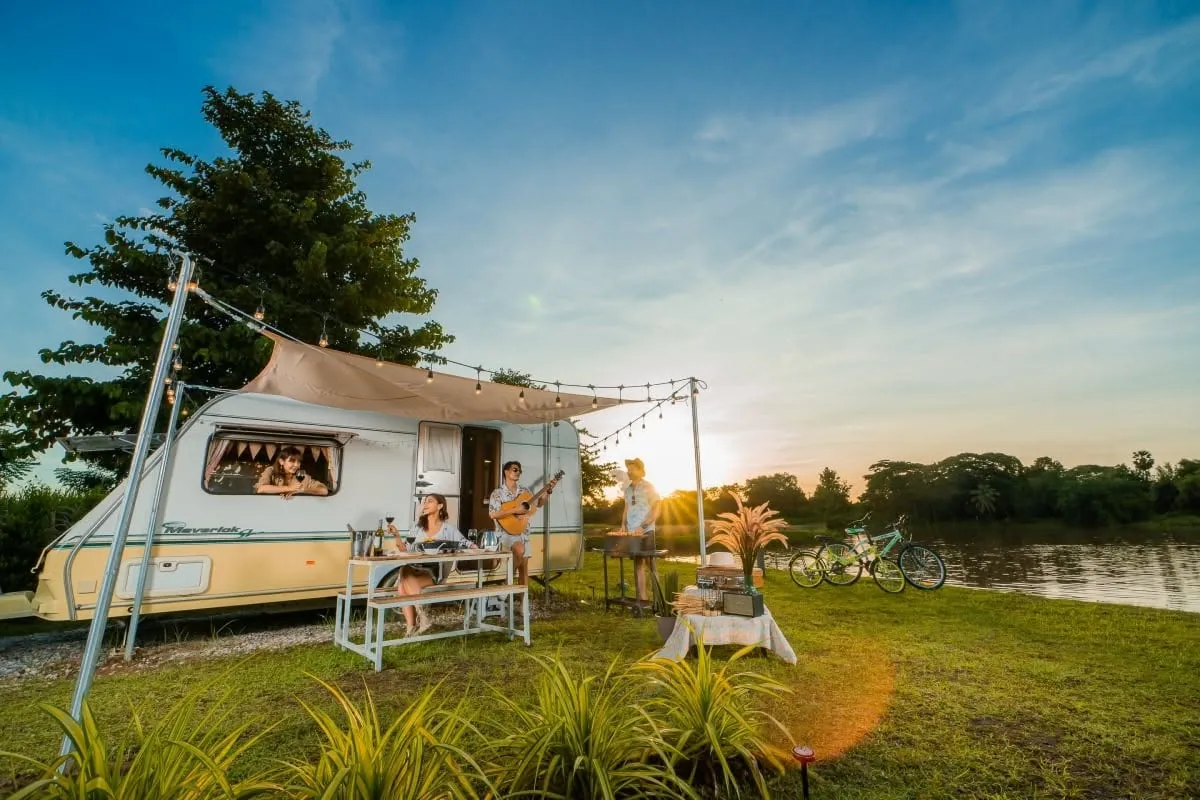
Motorhome camping by the river in Kanchanaburi Province. Source: MV Caravan
Besides distance, the important thing to consider is that the "destination" should be a province with abundant nature, with water sources, mountains, or forests that provide a relaxing feeling. Most importantly, there must be tent grounds or private establishments that support motorhome parking (RV Park) which can connect water and electrical systems (Hook-up) to the vehicle to make living on the motorhome for all 3 days smooth and convenient. If you're still unsure which motorhome suits you, you can read more at What is a motorhome and how many types are there? for information to help with your decision before starting the trip.
Example of a 3-day 2-night motorhome travel plan: "Kanchanaburi" route with nature and riverside
Kanchanaburi Province is one of the top choices for starting a Slow Travel motorhome trip because the distance is not far from Bangkok, easy to drive, and there are places designed specifically to accommodate motorhomes, emphasizing a slow-paced life by the Khwae Noi River or Khwae Yai River.
Day 1 — Depart, stop to see sights along the way, and enter the first night's accommodation
09:00 Pick up the motorhome, inspect the condition of the vehicle and all systems thoroughly, stop to buy supplies, ingredients, and drinking water at a supermarket.
11:00 Drive towards Kanchanaburi Province (approximately 2 hours) stop for lunch at a riverside café or local restaurant with a relaxed atmosphere.
14:00 Arrive at the motorhome parking spot, such as The Campster Kanchanaburi which is a camping area with facilities and a motorhome parking area designed specifically.
15:00 Park the motorhome, connect electricity and water systems, set up the awning, arrange the resting area.
16:00 - 18:00 Time for Slow Travel - grab a camping chair and sit by the river, read a book, listen to the birds, or take a light kayak ride.
18:30 Prepare a simple dinner, eat together in front of the motorhome parking area, enjoy the cool evening air.
Day 2 — Spend time with nature and local activities
08:00 Wake up early to catch the sunrise, make a drip coffee or brew tea in the motorhome, have a simple breakfast like toast and scrambled eggs.
10:30 Pack up (you can leave the motorhome parked and use bicycles/walk, or drive the motorhome to nearby attractions) stop by Safari Park Kanchanaburi to see animals up close and take beautiful photos.
13:00 Have lunch, visit the Giant Rain Tree and rest under the large tree, breathe in fresh air.
15:30 Return to the original camping area, or move to another private camping ground in the Thairyok area to change the atmosphere.
17:00 Watch the sunset by the Khwae Noi River, prepare a barbecue, grill seafood or meat for dinner.
Day 3 — Spend the morning slowly and return
08:30 No need to rush, take time to rest on the soft bed in the motorhome, prepare breakfast, and absorb the natural atmosphere to your heart's content.
11:00 Disconnect water and electricity, pack all camping equipment away, check that everything is in order before checking out from the area.
12:00 Drive into Kanchanaburi town, stop for lunch at a delicious riverside restaurant, buy local souvenirs.
14:00 Visit a natural-style café, or stroll by the Khwae River bridge without hurrying.
15:30 Drive back to Bangkok safely and return the motorhome in the evening.
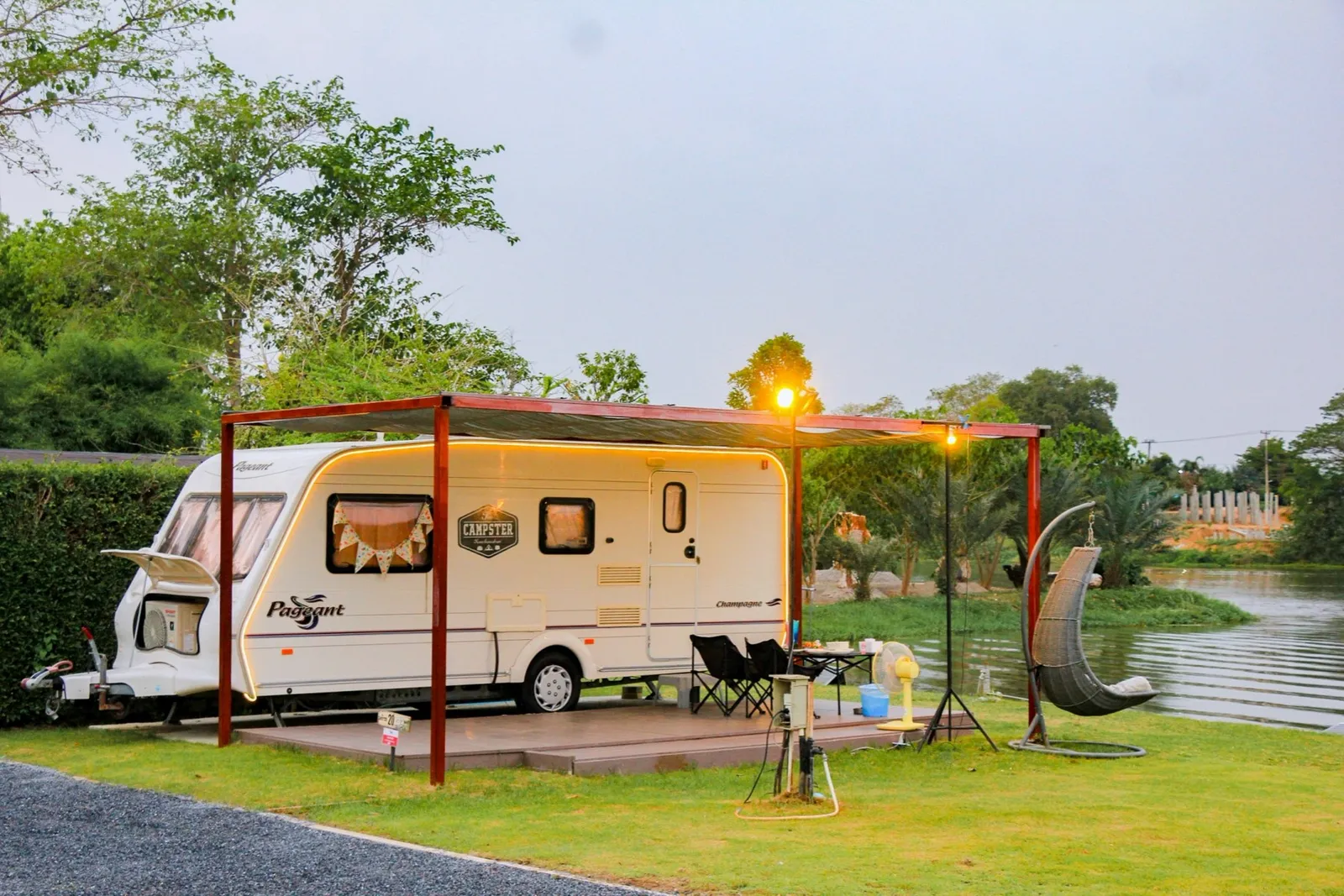
The Campster Kanchanaburi a convenient motorhome parking spot. Source: Expedia
Motorhome parking spots and overnight accommodation points to know
Private camping grounds that support motorhomes
For Thailand, many private camping areas are starting to adapt to support the Campervan trend by allocating specific areas (RV Slot) that are wide enough for motorhomes, complete with electrical outlets (Power Hook-up) and water connections (Water Hook-up). It's recommended to search for camping grounds in Facebook groups for motorhome enthusiasts, or search for popular spots in Kanchanaburi, Khao Yai, and Ratchaburi.
Areas in parks or tourist attractions that allow accommodation
Many national parks allow you to bring a motorhome and stay overnight in the camping areas, but the important thing to note is that these areas often don't have direct power and water connections, so you'll need to rely on the vehicle's battery system (Solar Cell / Inverter) and the water tank reserve inside the vehicle. Also, parks often have strict rules about keeping noise down after 22:00.
How to check bathrooms, electricity, water, and overnight parking conditions
Before deciding on a reservation, you should call and inquire with the facility manager in detail, including:
Does it have power outlets that support the motorhome's power consumption (some motorhomes use home air conditioners which consume quite a bit of electricity)?
Are there fresh water fill-up points and wastewater disposal points (Black water/Grey water)?
Is the communal bathroom at the camping area clean and sufficient in number?
Does it allow cooking, setting up additional tents next to the motorhome, etc.?
Budget for a 3-day 2-night motorhome trip - how much money do you need to prepare?
Motorhome travel has a different cost structure than renting a regular car combined with hotel accommodations. Here is a budget assessment guideline (for 2-4 travelers) so you can plan comprehensively.
Expense Item | Calculation Method | Notes |
Motorhome Rental Cost | Price per day × 3 days | Price depends on size, model, and amenities (please verify current prices from the service provider) |
Fuel and Highway Toll Costs | Round-trip distance × consumption rate | Motorhomes are usually heavy, so fuel consumption will be slightly higher than regular cars (Kanchanaburi round trip approximately 1,500 - 2,500 baht) |
RV Park Parking Cost | Price per night × 2 nights | Private grounds typically charge approximately 500 - 1,500 baht/night (including water and electricity) |
Food and Beverage Costs | (Expense/person/meal) × number of people × days | Buying fresh ingredients to cook your own meals will help you control this portion of the budget very well |
Attraction Entry Fees/Activities | Depending on chosen locations | Such as park entrance fees, safari park entrance fees |
Emergency Reserve Fund | 10-15% of total budget | For miscellaneous expenses or emergencies |
Tip: If you're traveling with a family or group of 4 friends, when you divide the motorhome rental and fuel costs per person, you'll find that the total expense is comparable to or may be more economical than booking multiple hotel rooms and renting separate vans.
Prepare before starting a Slow Travel trip with a motorhome
Check vehicle condition and necessary equipment
If you're renting a motorhome, the company will take care of engine maintenance to have it ready for use. However, what you need to learn and check when picking up the vehicle is the systems inside the motorhome such as how to turn the water pump on/off, how to use the chemical toilet, how to charge from outside, and how to fold and store the bed or awning. Additional equipment you should bring includes a long extension cord, garbage bags for waste disposal, and a flashlight.
Book parking spots in advance and check the facility's rules
During long holidays, popular camping areas and motorhome parking spots fill up quickly, so you need to book in advance at least 2-4 weeks and don't forget to inform the parking area of the length of your motorhome so they can prepare an appropriate parking slot that's easy to enter and exit.
Plan contingencies for rain or emergencies
The charm of Slow Travel is the flexibility to handle situations. If it rains so much you can't camp and cook outside, consider it a good opportunity to spend time playing board games, watching movies, or reading books inside the motorhome's cabin. Therefore, you should always keep semi-prepared foods or snacks on hand in the vehicle.
Summary of planning a Slow Travel trip by motorhome
A 3-day 2-night Slow Travel trip by motorhome is a gift to yourself to truly rest, without rushing against time, staying close to nature, and having a cozy private space like moving your home to set up by a river. A route like Kanchanaburi is an excellent starting point for beginners, with comfortable driving distance and complete parking facilities. When you carefully calculate your budget and plan your parking spots, this trip will become a valuable memory experience.
If you're ready to start a journey with complete freedom, MIDO Car Rental is happy to provide high-standard motorhome rentals, thoroughly inspected condition, and complete amenities to make your Slow Travel trip perfect. You can see details of our various motorhome models and promotions at Motorhome Rental Service and go experience a new form of vacation!
About the author

Nattamon Khonngam
Online Marketing
Bachelor of Business Administration, Kasetsart University (2014-2018)
Master’s Degree in Marketing and Management, Western University (Current)
Online Marketer, specializing in Content Marketing, SEO & Digital Marketing
Skilled in AI, Data Analytics, Content Strategy & Digital Marketing