Japanese Power Plugs 2026: How Do They Work? Check Your Electrical Appliances Before Your Japan Trip
Nattamon KhonngamPublished on: September 29, 202611 min read36 views
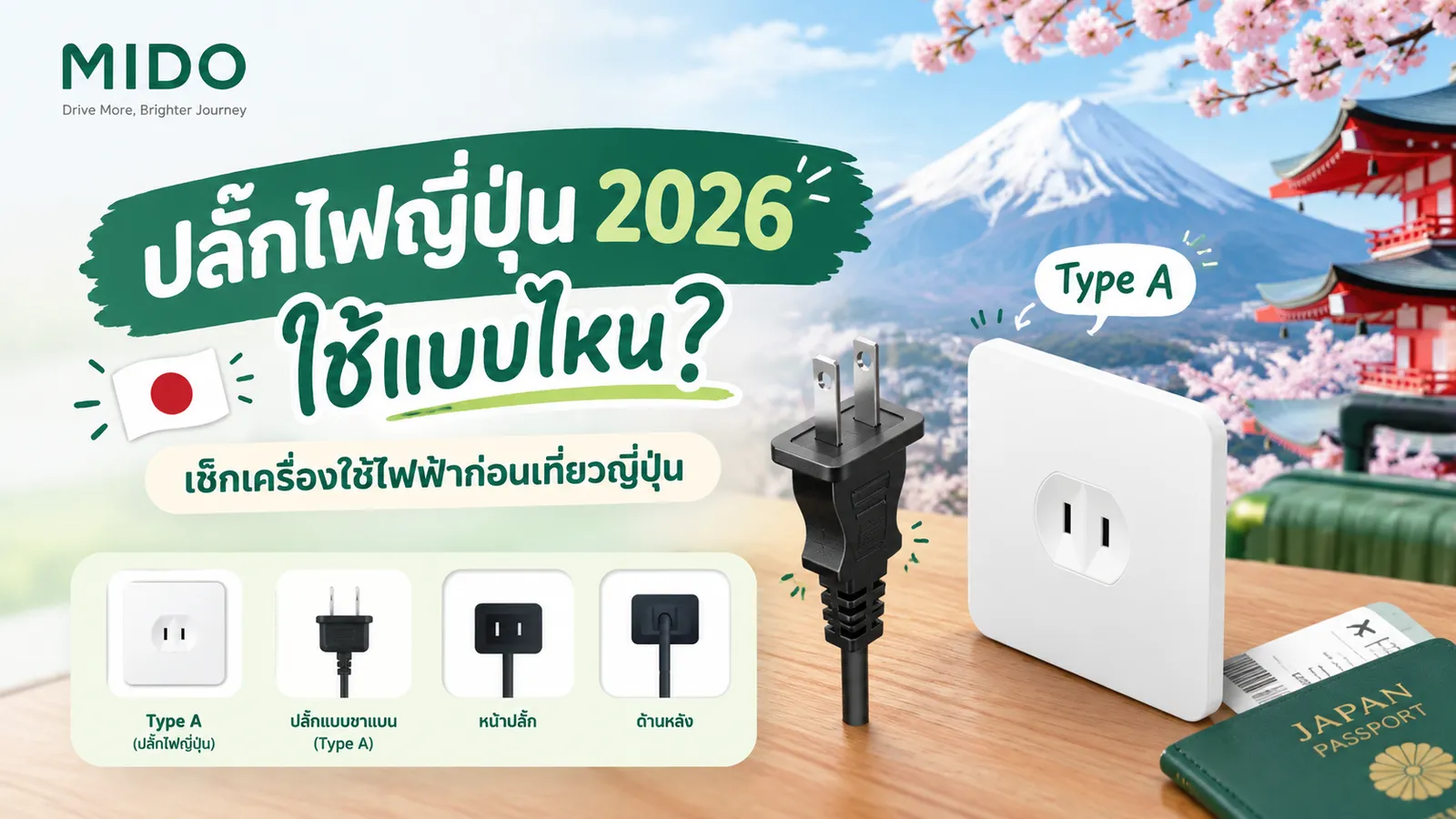
Hello dear travelers, is anyone packing their bags these days to prepare for a trip to Japan? Besides planning where to visit, booking accommodation, and preparing fashionable clothes to match the season, there's one more important thing that many people often overlook or forget to prepare, which is "power plugs and electrical appliances" itself!
Just imagine if you arrive in Japan and your phone battery dies, your camera battery is completely drained, and you can't plug in the charger at the hotel outlet either. Your wonderful trip would definitely be disrupted! Because we rely on smartphones for everything from viewing maps, searching for information, and taking beautiful photos. So today we've come to update information so everyone can check power plugs and electrical appliances before flying, so you can travel in Japan smoothly and worry-free! And if anyone wants to find more information about preparing for a trip to Japan or special spots to visit, you can read it at our Travel to Japan section!
Getting to know electricity and power plugs in Japan
Before bringing electrical appliances from Thailand to use in Japan, we need to understand their electrical system first. It's quite different from Thailand!
How many volts does Japan use?
Japan uses alternating current (AC) with a voltage difference of 100 volts (100V) throughout the country (whereas Thailand uses 220V). Besides this, the frequency of electric current (Hz) in Japan is also divided into 2 main zones:
Eastern Zone (such as Tokyo, Hokkaido, Tohoku): Uses 50 hertz frequency (50 Hz)
Western Zone (such as Osaka, Kyoto, Nagoya, Kyushu): Uses 60 hertz frequency (60 Hz)
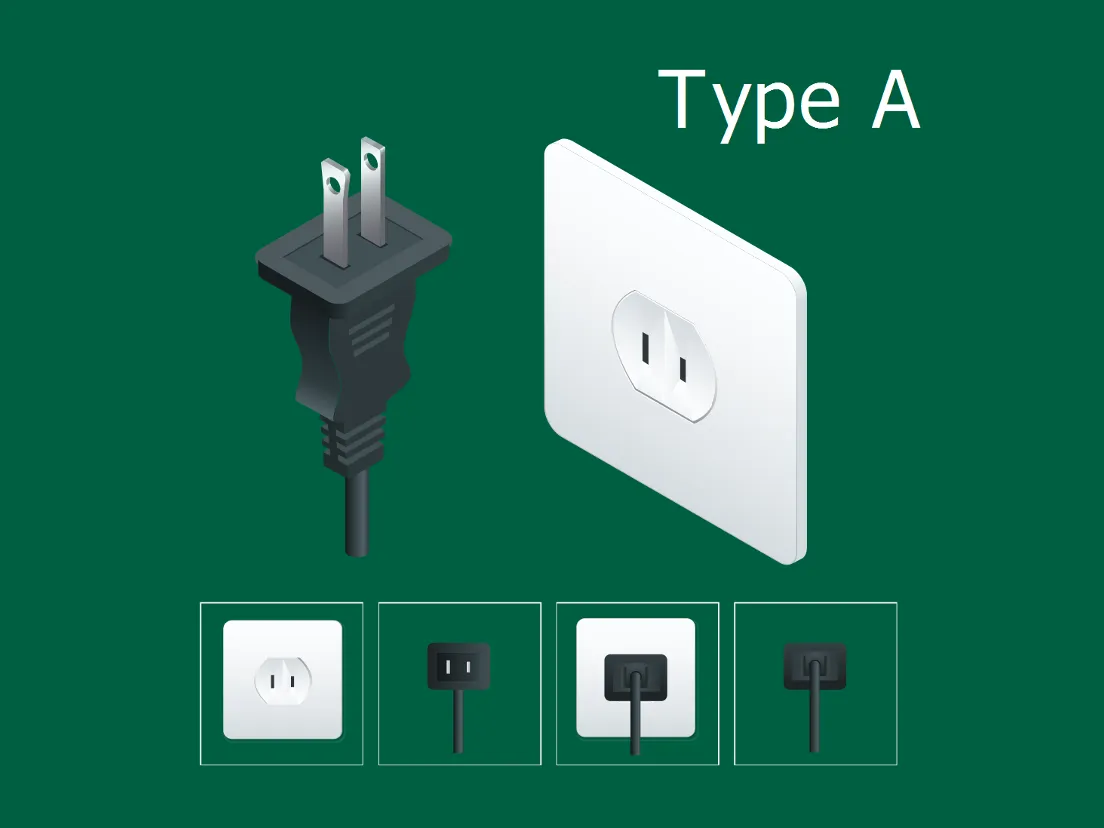
Type A outlet for flat 2-prong plugs. Source: NETIO products a.s.
Outlet and power plug characteristics in Japan (Type A)
Outlets embedded in walls of guest rooms, hotels, or cafes in Japan are Type A outlets, which have two parallel slot openings. Therefore, power plugs of electrical appliances that can be plugged in must be flat 2-prong plugs only
❌ If your device has a round 2-prong plug (Type C) or flat/round 3-prong plugs with ground wire (Type B, Type G), it will not be able to plug directly into Japanese outlets. You must use a power plug adapter.
Can Thai electrical appliances be used in Japan?
The answer is "some can be used, some cannot" depending on the power support of that specific device.
Simple way to check electrical appliances before packing
Before packing your luggage, take the charging cable or adapter of the electrical appliance to check the small label printed on the charger head. Look for the word "Input"
Definitely usable (Universal Voltage): If the label says
Input: 100V-240V(or 110-240V), it means this device can be used worldwide, including Japan. Most smartphones, tablets, laptops (notebooks), and camera battery chargers nowadays support universal voltage. You can be assured!Cannot be used (or may be damaged if used): If the label says
Input: 220Vor220V-240V(often found in hair dryers, hair straighteners, portable irons bought in Thailand), these devices cannot be used with 100V electricity in Japan. If you force it to plug in, the device may not turn on, work at reduced performance (for example, a hair dryer will have weak airflow and not be hot), or worse, the circuit may be damaged. We recommend using the hair dryer prepared by the hotel, which would be best.
How to use a power plug adapter (Universal Adapter) correctly
To solve the problem of plugs not fitting, the item that friends "must have" when traveling abroad is a power plug adapter (Universal Adapter).
Universal Adapter with charging ports. Source: 425degree
How to use a power plug adapter safely:
Adjust the plug prongs: Push the slider on the side of the Universal Adapter to extend the prongs as "flat 2-prong (Type A / US Standard)"
Plug into the wall outlet: Take the Adapter with adjusted flat prongs and plug it into the wall outlet of your hotel room in Japan
Plug in your device: Take the plug head of your device (whether round or flat 3-prong) and plug it into the back of the Adapter
Additional tip: Nowadays, good Universal Adapters usually come with USB-A and USB-C ports at the bottom, allowing us to plug in phone charging cables, power banks, and smartwatches all at once, using only one wall outlet. This saves a lot of outlet space in the hotel!
What if you forget to bring the plug? Where to buy power plug adapters in Japan
If something urgent happens and you forget to put the Adapter in your luggage when coming from Thailand, don't worry! There are many shops in Japan where we can easily find and buy power plug adapters.
Bic Camera electronic shopping center. Source: Plan My Japan
Don Quijote (Donki) store: A favorite shopping destination for tourists that opens late (many branches are open 24 hours). Stop by the electronics zone or travel accessories zone. They definitely sell adapters, and there are many options available!
Large electrical appliance stores: Such as Bic Camera or Yodobashi Camera. Go straight to the Travel Accessories or Smartphone Accessories section. There are many standard brand power adapters to choose from!
100 yen shops (Daiso, Seria, Can Do): If you're lucky to find a larger branch, they sell basic adapters (small ones that convert from round to flat prongs) at budget prices!
Convenience stores (7-Eleven, Lawson, FamilyMart): Although not all branches may sell Universal adapters, they do sell "chargers (adapters)" with USB ports that can plug directly into Japanese outlets. You can buy one and plug in your phone charging cable to use while you're out!
Conclusion: Be prepared, then go rent a car and drive around Japan!
Power plugs and electricity may seem like a small matter, but if you're not well-prepared, your trip can still be disrupted. In short, it's: "Keep a Universal Adapter with you always and don't forget to check if heat-generating electrical appliances support 100V-240V power." That's all—your battery will be full and you'll be ready to go take beautiful photos and keep wonderful memories throughout your trip!
Road trip to enjoy Japan to the fullest. Source: Torn Tackies
And for those who are fully charged up and want their Japan trip to be as convenient as possible, to experience new things, not having to carry heavy luggage up and down train station stairs, renting and driving a car yourself is the best answer! You can stop at photo spots along the way, visit cafes, or drive to surrounding towns freely.
We'd like to recommend a great service from MIDO car rental, a trusted car rental provider in Japan. We have new cars, cold air conditioning, ready-to-use condition, and even come with a GPS navigation system. Easy to drive, safe and worry-free! Anyone interested in booking a car in advance or wants to ask for more route information can visit MIDO's website. We're happy to serve you!
FAQ Frequently asked questions about Japan power plugs
Q: Can I bring a power bank to charge in Japan?
A: You can bring it and charge it normally! The phone charger adapter that we receive 100-240V power can be used to charge the power bank in a Japanese hotel outlet without any problem (but remember that the power bank must be carried in your carry-on only, absolutely no checked baggage).
Q: Can I use a power strip (extension cord) from Thailand in Japan?
A: You can use it (we recommend choosing a model with flat prongs or connecting through a Universal Adapter again). It will give you more outlet slots in the hotel, but remember that the current output is still 100V.
Q: Does MIDO car rental have phone battery charging ports inside the car?
A: Most rental cars nowadays come with USB-A or USB-C ports for charging batteries or connecting smartphones built-in. Or if you have a car charger that plugs into the cigarette lighter socket in the car, you can carry it to use as well!
Q: If a hair straightener label says 220V and I plug it through a Universal Adapter in Japan, will it get hot?
A: No, it won't get hot because the Adapter only changes the "shape of the plug prongs" but not the "electrical voltage." If you plug a 220V hair straightener into 100V power in Japan, the device may not work or become very slightly warm, not hot enough to straighten properly. We recommend buying a portable hair straightener that supports Universal voltage (100V-240V) to use instead, which would be best!
Additional tip: Nowadays, good Universal Adapters usually come with USB-A and USB-C ports at the bottom, allowing us to plug in mobile phone chargers, power banks, and smartwatches simultaneously using just one wall outlet. This saves a lot of outlet space in hotels!
Forgot to bring your plug? Coordinates for buying power adapter plugs in Japan
If an emergency happens and you forget to pack an Adapter in your bag from Thailand, don't worry! In Japan, there are many shops where we can easily find and buy power adapter plugs to solve the problem.
Bic Camera store, an IT shopping destination. Source: Plan My Japan
Don Quijote (Donki): A favorite shop for tourists that opens late (many branches are open 24 hours). You can visit the electronics zone or travel accessories zone. Power adapters are definitely sold there, and there are many types to choose from.
Large electronics retailers: Such as Bic Camera or Yodobashi Camera. Head straight to the Travel Accessories or Smartphone Accessories section, and you'll find standard brand power adapters to choose from.
100 Yen shops (Daiso, Seria, Can Do): If you're lucky to find a larger branch, they sell basic adapters (small ones that convert round prongs to flat prongs) at budget-friendly prices.
Convenience stores (7-Eleven, Lawson, FamilyMart): While they may not sell Universal adapters at every branch, they do sell USB port "chargers" that plug directly into Japanese outlets. You can buy one and use it with your mobile phone charging cable right away.
FAQ Frequently asked questions about Japanese plugs
Q: Can I bring a power bank to charge in Japan?
A: Yes, you can bring it and charge it normally. Your mobile phone charger adapter that accepts 100-240V can be plugged in to charge your power bank at a Japanese hotel without any problem. (But remember that power banks must be carried in your carry-on luggage only; they are strictly prohibited in checked baggage.)
Q: Can I use a power strip from Thailand in Japan?
A: Yes, you can use it (it's recommended to choose a model with flat prongs or use a Universal Adapter). It will give you more outlets in your hotel room, but remember that the current output is still 100V.
Q: Does a MIDO car rental have a phone battery charging port in the car?
A: Most rental cars nowadays have USB-A or USB-C ports for charging batteries or connecting smartphones built into the car. Or if you have a car charger that plugs into the car's cigarette lighter socket, you can bring that along and use it as well.
Q: If I plug a hair straightener labeled 220V through a Universal Adapter in Japan, will it get hot?
A: No, it won't get hot. The Adapter only converts the "shape of the plug prongs" but not the "voltage." If you plug a 220V hair straightener into a 100V outlet, it may not work properly or might get only slightly warm, so it won't straighten your hair well. It's recommended to buy a portable hair straightener that supports universal voltage (100V-240V) for the best results.
Summary: Prepare well, and let's go rent a car and drive around Japan!
Plugs and electrical current may seem like small matters, but if you're not prepared, it can put a damper on your trip. To summarize: "Always carry a Universal Adapter with you and don't forget to check if your electrical appliances that require heat support 100V-240V or not." That's all it takes to have a fully charged battery and be ready to go take beautiful photos and make wonderful memories throughout your trip.
And for those who come fully charged and want to make their Japan trip as convenient as possible, try new experiences, and don't have to carry heavy luggage up and down train station stairs, renting a car to drive yourself is the best answer! You can stop at photo spots on the way, stop by cafes, or drive to neighboring towns freely. Check out related articles about renting a car in Japan here.
We recommend a great service from MIDO car rental, a trustworthy car rental service in Japan. We have new cars with cold, strong air conditioning, and ready-to-use condition. Plus, we come equipped with GPS navigation. Easy to drive, safe and worry-free. If you're interested in booking a car in advance or following our useful articles, check out all articles .
About the author

Nattamon Khonngam
Online Marketing
Bachelor of Business Administration, Kasetsart University (2014-2018)
Master’s Degree in Marketing and Management, Western University (Current)
Online Marketer, specializing in Content Marketing, SEO & Digital Marketing
Skilled in AI, Data Analytics, Content Strategy & Digital Marketing