What is a motorhome and how many types are there? Get to know each type of motorhome before choosing to rent for your trip
Nattamon KhonngamPublished on: October 16, 202614 min read57 views
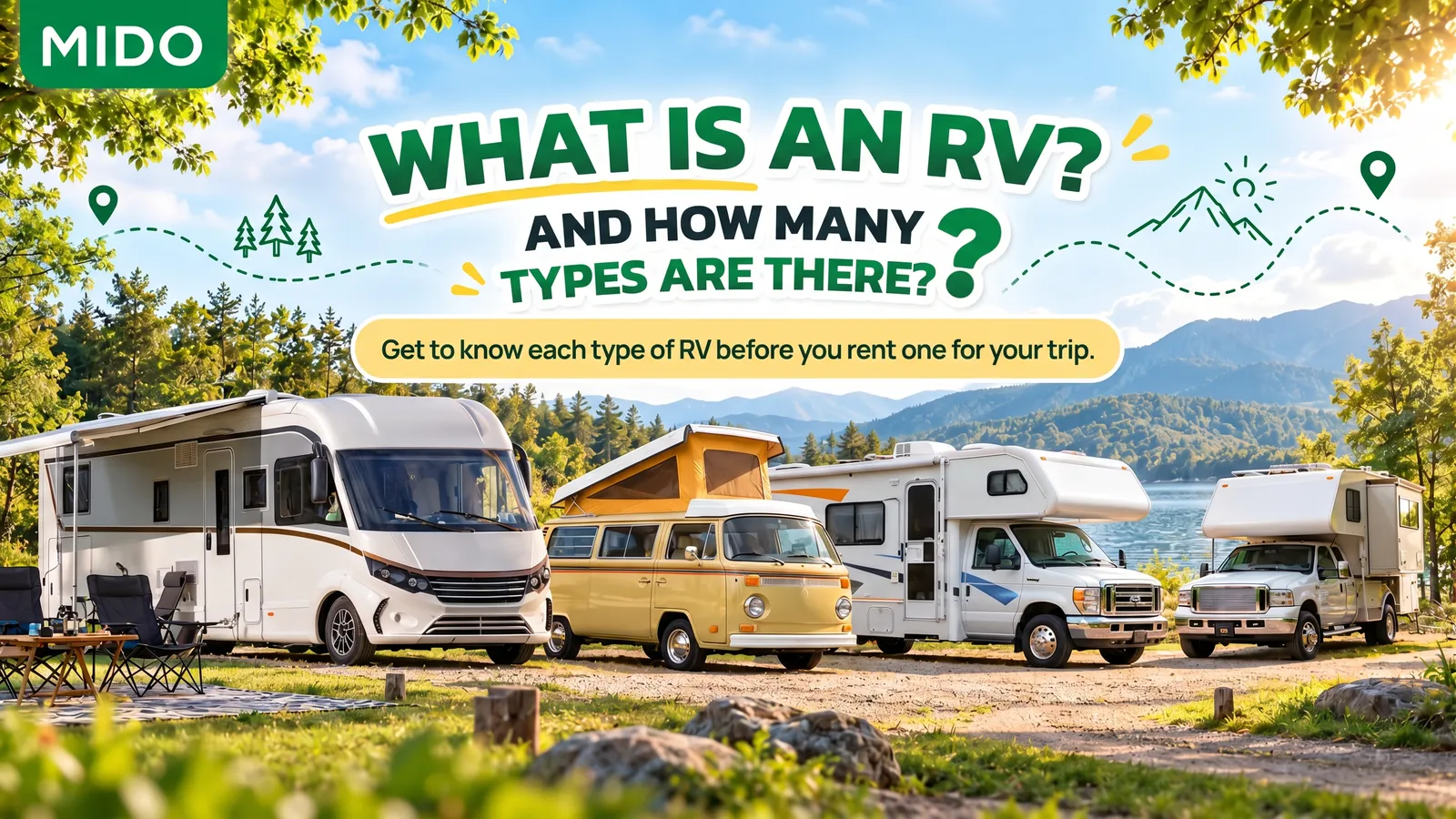
Motorhome (Recreational Vehicle or RV) is a vehicle that perfectly combines living space and travel into one. It is divided into 2 main families: self-propelled motorized RVs (Motorized RV) such as Motorhome or Campervan, and tow-behind RVs (Towable RV) such as Caravan or Fifth-Wheel Trailer. Motorhomes are typically designed with beds, sitting areas, kitchenettes, and basic utilities, allowing you to travel without depending on hotels all the time.
However, modern travel is not limited to just sleeping in a motorhome. If you want to plan a long-distance trip that emphasizes flexibility, using general car rental services for cross-provincial travel is also an option. Whether you choose a 7-seater car for family trips or plan a Low Season getaway to experience peaceful atmosphere and stay at good hotels and accommodations, this is another popular option that meets comfort needs, especially for travelers who want to continue travel immediately after landing. Before you decide on a travel style, this guide will take you deep into the meaning of motorhomes, all types, advantages, real costs, and comparisons you should know before traveling.
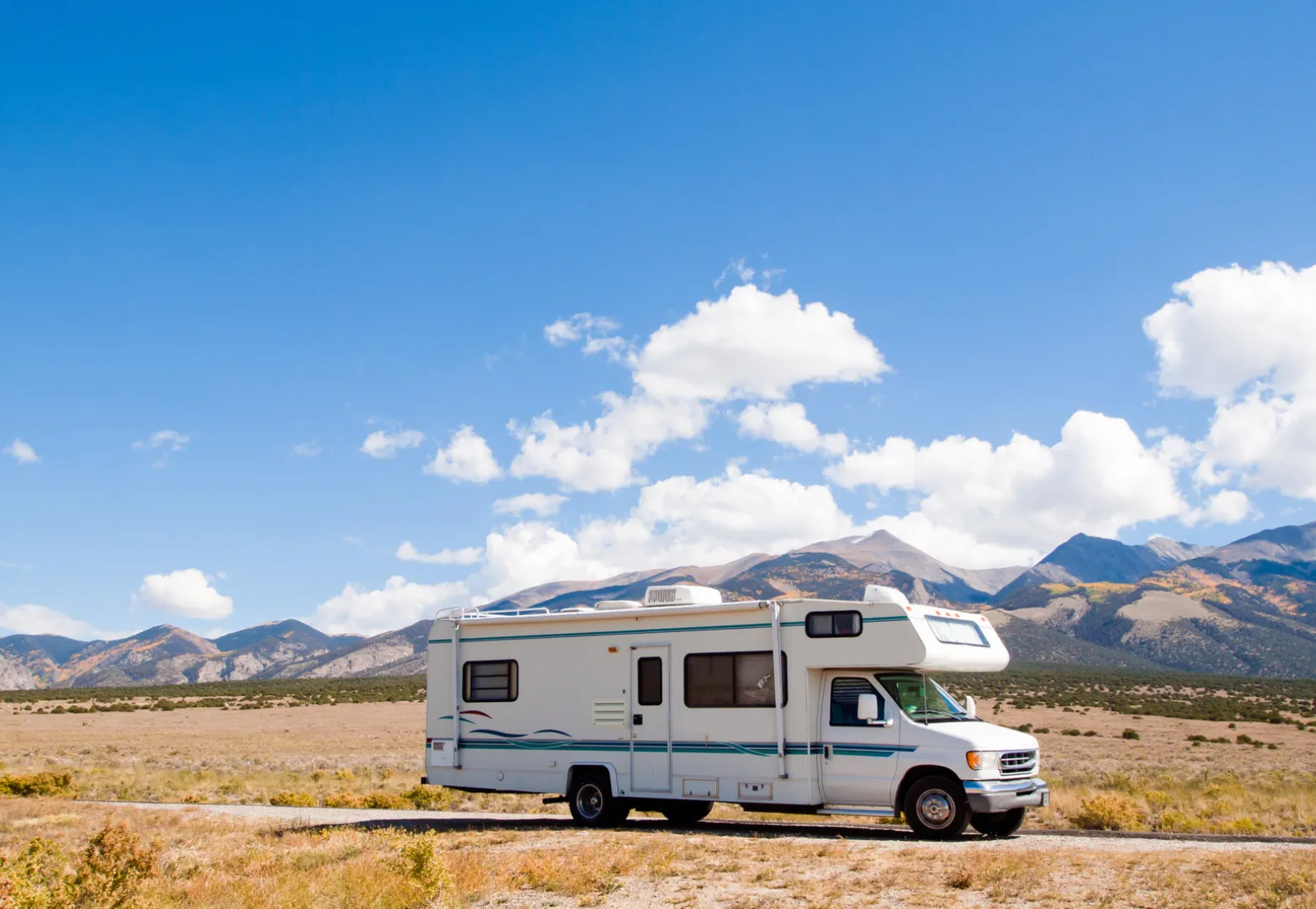
Class C motorhome with self-contained drive. Source: welcomia / Getty Images
What is a Motorhome?
Motorhome is called Recreational Vehicle internationally, or abbreviated as RV. It is a definition of a vehicle or trailer with living quarters designed for recreational activities, camping, and short to long-term travel. The origin of motorhomes began to meet the needs of road trip enthusiasts who desired high flexibility without wasting time packing in and out of hotels every day.
Structurally, motorhomes are classified into 2 main engineering groups:
Motorized RV (with self-contained engine): The chassis and cabin are built as one piece or connected together. Drivers can walk through from the driver's seat directly to the bedroom or kitchen. Examples include Motorhome and Campervan.
Towable RV (tow-behind): No mechanical engine for propulsion. A hitch (Hitch) must be attached to a regular car, pickup truck, or SUV to tow to the destination. Examples include Caravan, Travel Trailer, and Pop-up Camper.
The heart of a motorhome is combining "vehicle" with "residence," complete with basic amenities that make living outside the home smooth and comfortable, including sleeping areas, kitchenettes, workstations or dining tables, and independent electrical systems.
How Many Types of Motorhomes Are There? Deep Dive into Structure and Usage
The classification of motorhomes depends on the criteria used for categorization. If divided by U.S. and international standards, motorized motorhomes are classified as Class A, B, C, and tow-behind motorhomes are classified by towing mechanism and cabin size as follows:
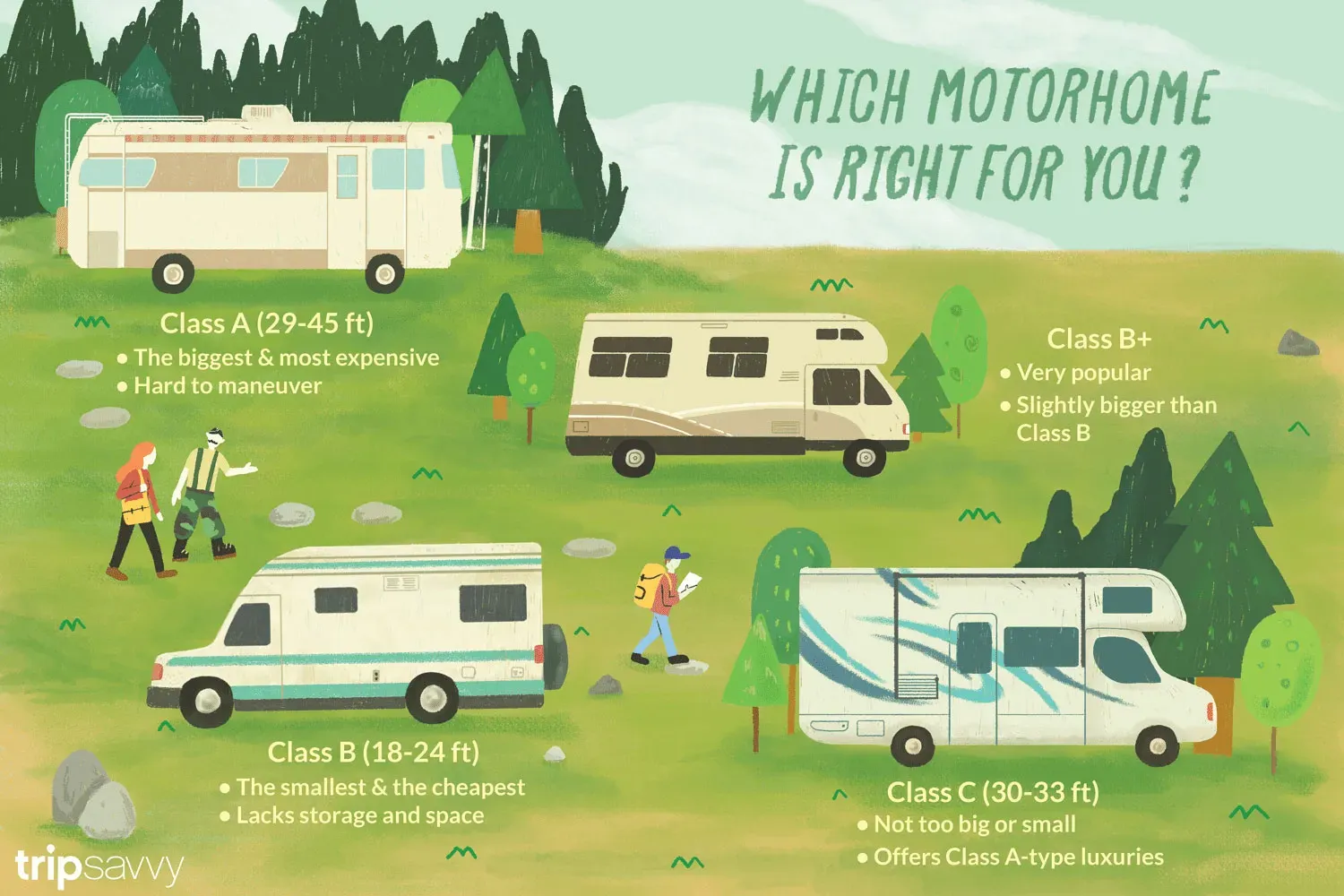
Motorhome. Source: TripSavvy / Catherine Song
1. Motorhome — Self-Contained Motorhome
Motorhome is a collective term for motorhomes with self-contained engines. Passengers can live in the cabin while traveling according to safety regulations. This type of vehicle facilitates smooth cross-city touring.
Large motorhome. Source: freepix / pixel
2. Campervan — Modified Van Motorhome
Campervan is typically built on the basis of a standard van such as Toyota Commuter, Mercedes-Benz Sprinter, or Ford Transit, with the rear cabin decorated into a bed, small kitchen counter, and storage compartment. It provides high flexibility similar to a regular car.
Campervan or Class B Motorhome offers high flexibility. Source: welcomia / Getty Images
3. Class A Motorhome — Large Premium Motorhome
Class A is the largest motorhome in the Motorhome family, built on the chassis structure of a large bus or truck. The front has large windows like a tour bus. Inside is spacious like a mobile condominium with separate bedrooms, bathrooms with separate wet/dry showers, marble kitchen counters, large refrigerators, and slide-out room expansion systems (Slide-out).
Class A Motorhome is a large luxury motorhome. Source: MartyEby / Getty Images
4. Class B Motorhome — Compact Campervan
Class B often overlaps with Campervan because it uses commercial van chassis as a base, but is equipped with insulation, backup electrical systems, fresh water tanks, and mobile sanitary facilities. It is ideal for 1-2 person travel or couples who enjoy exploring mountain roads and narrow streets.
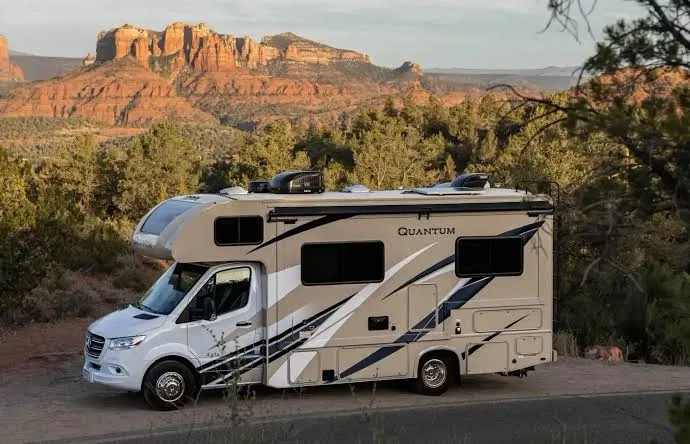
Class B Motorhome is a compact motorhome. Source: recnationstorage
5. Class C Motorhome — Family Favorite Motorhome
Class C is the easiest motorhome to identify, modified from a large pickup truck or van chassis (Cab Chassis). Its distinctive feature is the sleeping area that extends over the driver's cabin (Over-cab Sleeping Area / Alcove), which increases the upper bed space and saves lower space for sofas and dining tables. This makes it the most popular model for families of 4-6 people.
6. Caravan or Travel Trailer — Standard Tow-Behind Motorhome
Caravan or Travel Trailer is a cabin installed on a trailer chassis without an engine. It uses a bumper pull hitch to tow behind a car. The advantage is that once you reach a campsite or camping ground, you can detach the hitch and drive your personal vehicle away to explore the city freely.
Caravan tow-behind motorhome that can be detached. Source: welcomia / Getty Images
7. Fifth-Wheel Trailer — Giant Tow-Behind Motorhome
Fifth-Wheel has a cabin size similar to Class A but in tow-behind form. The front hitch extends onto the bed of a heavy-duty pickup truck and is secured with a special horseshoe-shaped coupling (Fifth Wheel Hitch). This coupling provides better weight distribution and directional control when turning compared to standard trailers.
Fifth-Wheel Trailer is a large motorhome attached to pickup bed. Source: jetcityimage / Getty Images
8. Pop-up Camper or Folding Camper
Pop-up Camper is a lightweight trailer that can fold flat while driving. When you reach a campsite, the roof and canvas or composite walls are lifted up and expanded into a bedroom. It is suitable for beginners who want convenience in towing, fuel savings, and easy storage in a home garage.
Pop-up Camper is a lightweight fold-out tent trailer. Source: SimplyCreativePhotography / Getty Images
Motorhome Type Comparison Table
Motorhome Type | Distinctive Features | Usable Space | Maneuverability | Driving Ease | Suitable Travelers | Considerations Before Renting |
|---|---|---|---|---|---|---|
Class A | Large bus-like body, luxury, full amenities | Very spacious (has Slide-out) | Very low | Requires advanced skills, wide turning radius | Large families, elderly | High fuel consumption, cannot enter narrow alleys |
Class B (Campervan) | Standard van body, parks in normal parking spots | Compact, just right | High | Easy to drive, like a regular van | Solo travelers, couples (1-2 people) | Limited space, bathroom often combined |
Class C | Sleeping area extends over cab, balanced space | Medium to large | Medium | Medium (watch roof height) | Families (3-6 people), friend groups | Must watch height when passing bridges |
Caravan | Tow-behind, detach trailer to drive separate vehicle | Medium to large | Medium | Must watch turning and backing up | Campers, long stays at one location | Tow vehicle must have sufficient towing capacity |
Fifth-Wheel | Hitch attached to pickup bed, high ceiling, airy | Very spacious | Low | Difficult to drive, requires special pickup truck | Families staying long-term | Very heavy, requires special pickup truck |
Pop-up Camper | Folds down, flat profile, light weight | Compact when expanded | High | Easy to tow, doesn't obstruct rear view | Adventure campers, budget-conscious | Lower insulation and sound dampening |
Equipment and Amenities Inside a Motorhome
The engineering systems inside a motorhome are what make it different from regular vehicles. Equipment installed varies depending on size and type:
Relaxation and sleeping area inside a motorhome. Source: bizoo_n / Getty Images
Sleeping Area: Ranges from fixed beds at the rear, bunk beds, over-cab beds to convertible dinettes.
Kitchenette: Most motorhomes come with a sink, built-in or induction stove, 12V/220V refrigerator, and kitchen storage.
Water System: Divided into 3 clear parts: Fresh Water (clean water tank for consumption), Grey Water (wastewater from sink/shower), and Black Water (toilet waste tank).
Electrical System: Uses auxiliary batteries (Auxiliary/Leisure Battery) providing 12V power for lights and pumps, combined with an inverter converting to 220V, and can connect to external shore power when parked at campgrounds.
Kitchen counter and storage space in a motorhome. Source: Mint Images / Getty Images
Which Motorhome Type Suits You?
Couples and Solo Travelers: Suitable for Campervan (Class B) because it's easy to drive, convenient to park, and can easily visit cafes or enter downtown areas.
Families with Small Children: Suitable for Class C Motorhome because the sleeping area above the cab clearly separates private space for children.
Friend Groups of 4-6: Suitable for Class C or medium Caravan with central dining area for gathering and socializing.
Long-Stay Campers: Suitable for Caravan or Fifth-Wheel parked at seaside or mountain campgrounds, where you can detach the tow vehicle to shop at markets.
Motorhome Beginners: Should start with Campervan or short Class C (not exceeding 6-7 meters) to reduce anxiety about distance estimation and backing up.
Advantages and Limitations of Traveling in a Motorhome
Advantages
High Freedom and Flexibility: Can change destinations according to weather, not bound by hotel check-in/check-out times.
Panoramic Nature Experience: Wake up to cool breezes by a lakeside or watch the sunrise over cliffs from your bedroom window.
No Frequent Packing: All luggage stays stored in the motorhome throughout the trip.
Limitations
Driving Requires High Concentration: Heavy weight, wind resistance, and high center of gravity make braking and turning slower than regular cars.
Waste Management: Travelers must empty wastewater (Grey/Black Water) and refill fresh water themselves.
Urban Access Restrictions: Large motorhomes cannot enter underground parking, shopping malls, or narrow city alleys.
How Much Does a Motorhome Cost? What Expenses Should You Prepare?
Motorhome rental has different cost structures than regular car rental, divided into major categories:
Daily Rental Rate: Depends on type and season. Internationally (e.g., Japan, New Zealand, Australia), average rates are around 15,000-35,000 yen/day or 150-350 USD/day. In Thailand, Campervan rental starts from approximately 5,000-9,000 baht/day.
Security Deposit: Usually holds 20,000-50,000 baht on credit card (or 1,000-3,000 USD internationally).
Fuel Cost: Motorhomes consume more fuel than regular cars (approximately 6-10 km/liter).
Campsite/RV Park Fees: Powered sites with electricity and water cost around 30-80 USD per night (or 300-800 baht in Thailand).
Cleaning and Equipment Rental: Linen rental, gas cylinder, and wastewater tank cleaning fees if not emptied before return.
RV Campsite with power hookup. Source: Brenda Nielsen / Getty Images
Recommended Motorhome Rental Companies and Comparison Websites
For planning motorhome travel, choosing professional providers with safety standards is important:
1. Camplify
Service Areas: Australia, New Zealand, United Kingdom, Spain
Vehicle Types: Campervan, Motorhome, Caravan (Peer-to-Peer RV Rental system)
Official Website: www.camplify.co.uk
Highlights: Wide variety of vehicles from owners directly, comprehensive insurance coverage.
2. Cruise America
Service Areas: United States and Canada
Vehicle Types: Class C Motorhome and Truck Camper
Official Website: www.cruiseamerica.com
Highlights: Major provider with branches throughout North America, vehicles designed for families, easy to drive, durable.
3. Apollo Motorhome Holidays
Service Areas: Australia, New Zealand, Europe
Vehicle Types: 2-Berth Campervan to 6-Berth Motorhome
Official Website: www.apollocamper.com
Highlights: New vehicles in ready-to-use condition, pickup/drop-off at major airports.
4. Ritzcampervan (Ritzcamp)
Service Area: Thailand
Vehicle Types: Motorhomes and campervans for travel
Official Website: www.ritzcampervan.com
Highlights: A campervan rental provider in Thailand offering various vehicle options equipped with travel amenities. Ideal for travelers seeking a road trip adventure and a relaxing getaway surrounded by nature. Vehicle models, rental prices, and terms and conditions can be checked on the official website.
(Note: For motorhome rental providers in Thailand, most are small operators or specialized vehicle conversions. Renters should directly contact them to verify terms, insurance, and operating licenses before entering a contract.)
10 Steps to Choose the Right Motorhome Rental
Determine Route and Terrain: Check if the route has curves, steep grades, or low bridges.
Calculate Number of Travelers and Beds Needed: Choose a vehicle with enough berths without crowding.
Select Vehicle Size Appropriate for Driver: If inexperienced with large vehicles, keep length under 6 meters.
Verify License Requirements: Confirm your license covers the vehicle's weight (most vehicles under 3.5 tons can use international driving permit or regular car license).
Check Insurance Terms: Choose insurance with zero excess/full protection option.
Verify Damage Deposit Amount: Prepare credit card limit for security deposit hold.
Check Mileage Allowance: See if contract includes unlimited mileage or daily km limits.
Verify Included Equipment: Check for dishes, bedding, external power cable, and water hose.
Plan Campsite Bookings in Advance: Research authorized RV parks or campgrounds, no unauthorized overnight parking.
Thoroughly Inspect Vehicle Before Accepting: Take photos and videos around the vehicle, check water levels and test all electrical systems.
How Do Motorhomes Differ from Regular Rental Cars?
Although motorhomes offer thrilling adventure experiences, motorhome travel may not suit everyone. Compared to regular car rentals, there are differences in several dimensions:
Comparison Aspect | Motorhome (Motorhome / RV) | Regular Car Rental (Sedan / SUV / Van) |
|---|---|---|
Accommodation | Can sleep and cook immediately on vehicle | Must book hotels, resorts, or homestays separately |
Driving Flexibility | Low to medium, hard to find parking, difficult tight turns | High, flexible, easy to park in narrow alleys and buildings |
Fuel Consumption | High (heavy body and wind resistance) | More economical, especially sedans and hybrids |
Daily Responsibilities | Must refill water, empty wastewater, connect power, dump waste | No utility system maintenance, just return on schedule |
Comfort During Rest | Limited space, compact bed | Comfortable standard room, soft bed, cool AC |
For travelers who enjoy road trip experiences, driving to scenic spots and enjoying local food in small alleys, and wanting comfortable standard hotel accommodations, choosing MIDO Car Rental car rental services is an excellent choice that perfectly meets flexibility and value needs.
(Important Note: MIDO Car Rental provides regular car rental services such as sedans and SUVs, not motorhome rentals. If you're interested in selecting a vehicle for regular travel, you can learn more at MIDO Car Rental)
Regular car rental provides high flexibility on travel routes. Source: Boogich / Getty Images
How to Plan a Road Trip for Maximum Convenience and Safety?
Plan Daily Driving Distance Not Exceeding 250-300 kilometers: To prevent driver fatigue and allow time for sightseeing.
Check Gas Stations and Service Areas: On mountain or rural routes, gas stations may be dozens of kilometers apart.
Select Vehicle Suitable for Number of Passengers and Luggage: For groups of 4-6, choose a car rental type SUV or van with adequate storage.
Prepare Emergency Equipment and First Aid Kit: Flashlight, basic medicines, and backup phone chargers are essential.
Study Local Traffic Regulations: Especially speed limits and parking regulations.
Frequently Asked Questions About Motorhomes (FAQ)
1. What is a Motorhome?
A motorhome (RV) is a vehicle or trailer designed with living quarters, complete with beds, kitchen, and electrical systems for travel and recreation.
2. How Many Types of Motorhomes Are There?
By main structure, there are 2 groups: motorized motorhomes (Class A, B, C) and tow-behind motorhomes (Caravan, Fifth-Wheel, Pop-up Camper).
3. How Do Motorhome and Campervan Differ?
Motorhome is built on a large chassis for full-time living with separate bathroom. Campervan uses a standard van body, modified inside, emphasizing compactness and flexibility.
4. Do All Motorhomes Have Bathrooms?
No. Small motorhomes like Pop-up Camper or some Campervans may not have bathrooms, or only portable toilets (Porta Potti).
5. What Driver's License Does a Motorhome Require?
In Thailand and most countries, if motorhome weight doesn't exceed 3,500 kg, a regular car license is sufficient. Larger or heavier combinations may require special licenses.
6. How Much Does a Motorhome Rental Cost?
Internationally, average rates are 150-350 USD per day. In Thailand, Campervan rental starts from approximately 5,000-9,000 baht per day, depending on model and season.
7. Can Beginners Rent a Motorhome?
Yes, but should start with Campervan or short Class C to get comfortable with vehicle control. Study water filling and waste disposal systems before traveling.
8. Where Can I Rent a Motorhome in Thailand?
Thailand has specific operators offering Campervan rentals or stationary camp motorhomes. Check licenses and contracts directly with providers.
9. Where Can Motorhomes Park for Overnight Stays?
Only at authorized campgrounds, RV parks, or national parks. Do not park overnight on public roads or private property without permission.
10. If I Want a Road Trip Without Sleeping in a Vehicle, What Should I Choose?
Use car rental services for regular vehicles like sedans or SUVs, drive to your destination, and stay at standard hotels or resorts for comfort and flexibility.
Conclusion — Choose a Motorhome Suitable for Your Trip
Motorhome travel opens truly unique experiences offering freedom and close nature connection. Choosing the right motorhome type—whether Motorhome, Campervan, or Caravan—requires considering budget, number of travelers, driving skills, and route characteristics.
However, if your trip emphasizes driving flexibility, easy operation, access to all streets and alleys without worry, and comfortable rest on soft hotel beds after a full day of travel, choosing regular car rental from MIDO Car Rental is the perfect answer. You can explore details and plan your trip at MIDO Car Rental's official website to make every trip smooth, safe, and memorable.
About the author

Nattamon Khonngam
Online Marketing
Bachelor of Business Administration, Kasetsart University (2014-2018)
Master’s Degree in Marketing and Management, Western University (Current)
Online Marketer, specializing in Content Marketing, SEO & Digital Marketing
Skilled in AI, Data Analytics, Content Strategy & Digital Marketing