What is Nissan Rent a Car? Get to know Japanese car rental services with booking steps and travel preparation guide
Nattamon KhonngamPublished on: November 2, 202618 min read3 views
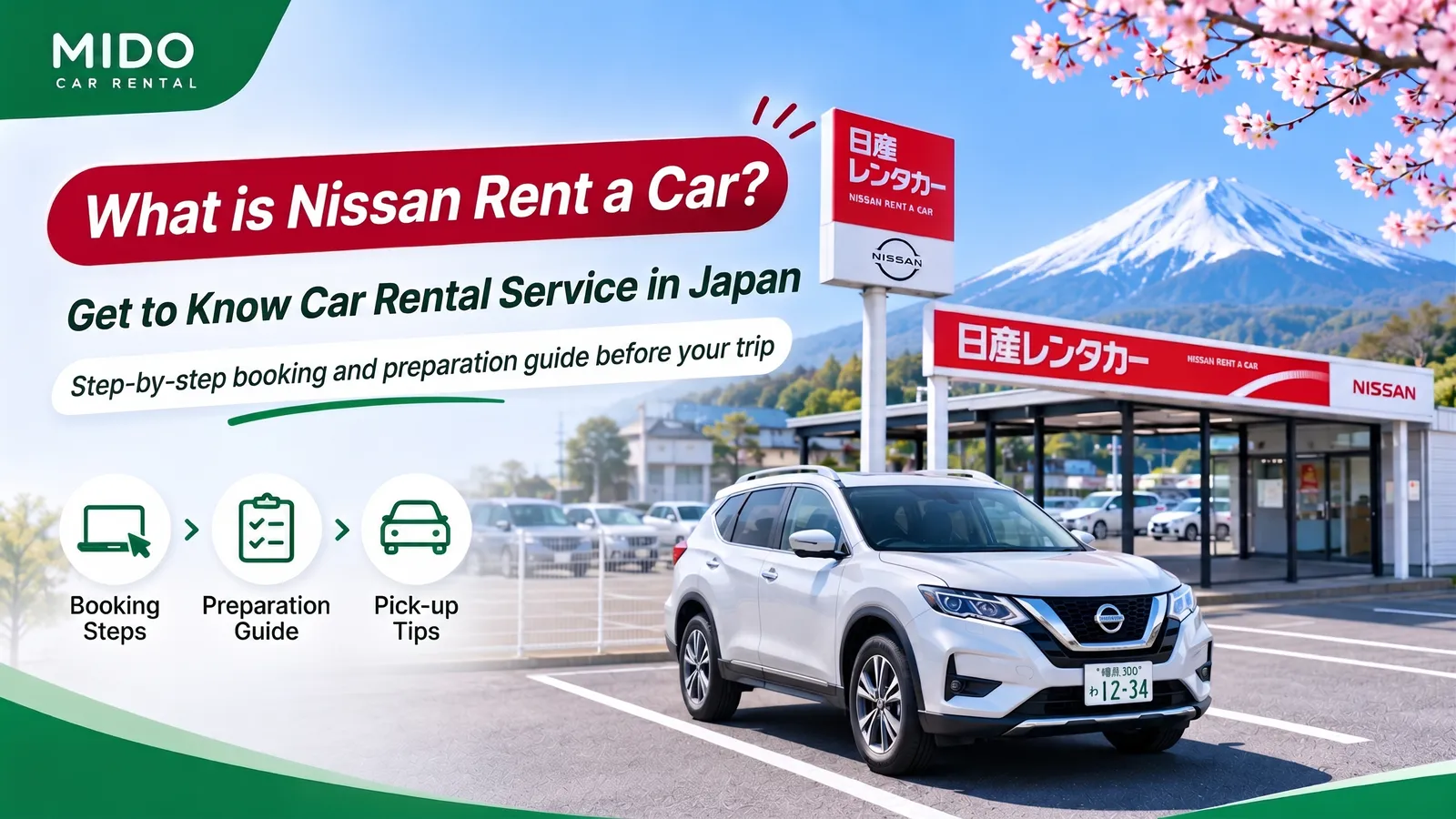
Self-driving travel in Japan has continuously gained popularity, especially car rental in Japan which provides ultimate freedom of travel. For Thai tourists who want to experience new adventures, whether it's driving to enjoy scenic views, stopping to rest as you please, or accessing tourist attractions that trains can't reach, one of the highly trusted car rental service providers is Nissan Rent a Car, which stands out with vehicle quality directly from the Nissan brand.
Choosing to rent a car in Japan perfectly addresses the needs for multi-city travel, nature trips, family outings with elderly members, or groups of friends with lots of luggage. In this article, MIDO Car Rental will introduce you to what Nissan Rent a Car is, what types of vehicles they offer, which branches are most convenient, and dive deep into the step-by-step process of booking a car rental in Japan from start to finish, so your trip can be as smooth as possible.
If you're planning a trip, you can find additional information to prepare from our collection of popular Japan tourist attractions, or if you're aiming to see Mount Fuji, you can check out Mount Fuji viewpoints that are easy to reach by car. For those focusing on travel in the capital and surrounding cities, we have a Tokyo travel guide and interesting Tokyo attractions, as well as tips on selecting Tokyo souvenirs before heading back. For food lovers and shoppers in the Kansai area, don't miss Osaka attractions guaranteed to cater to every lifestyle.
Who is Nissan Rent a Car
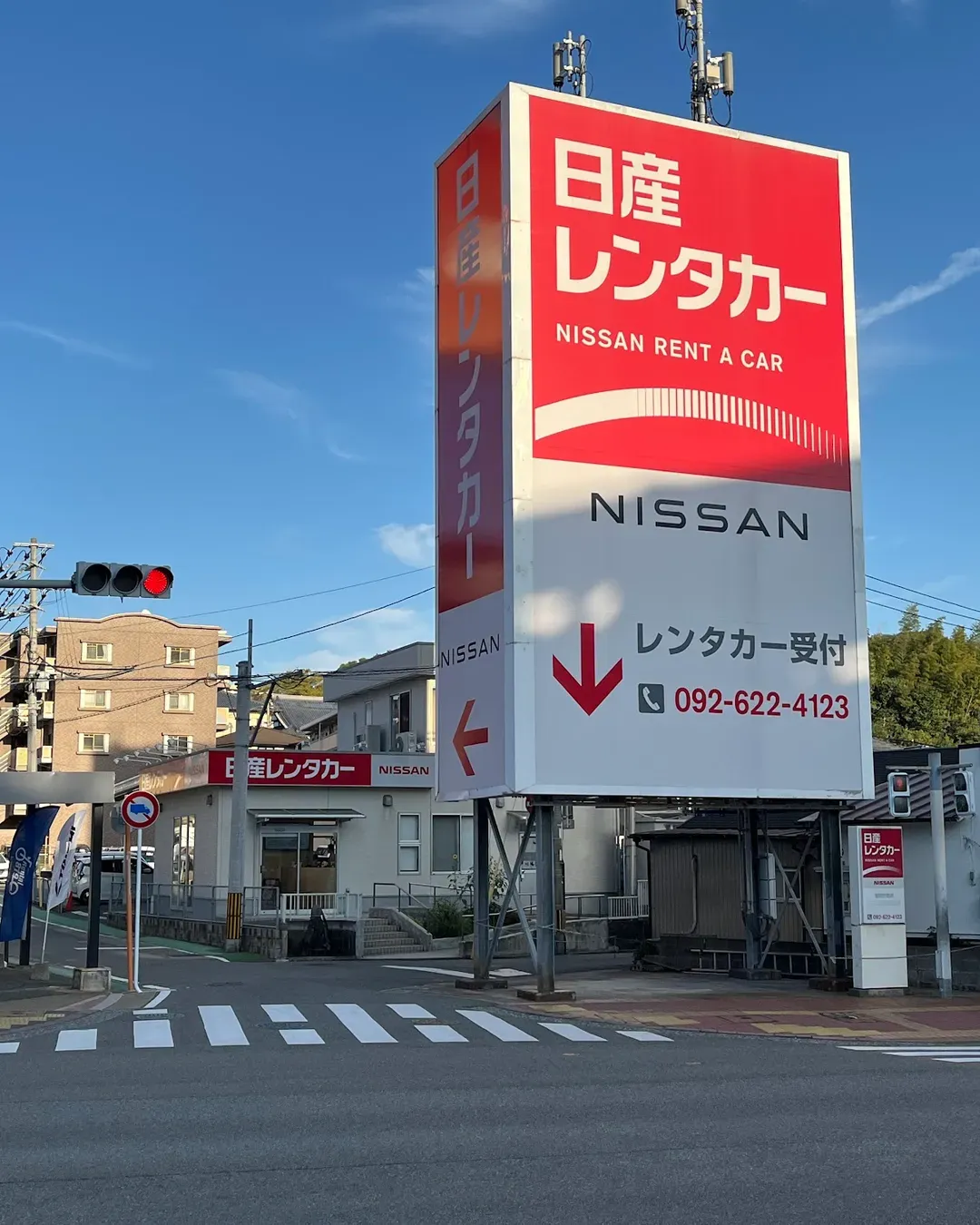
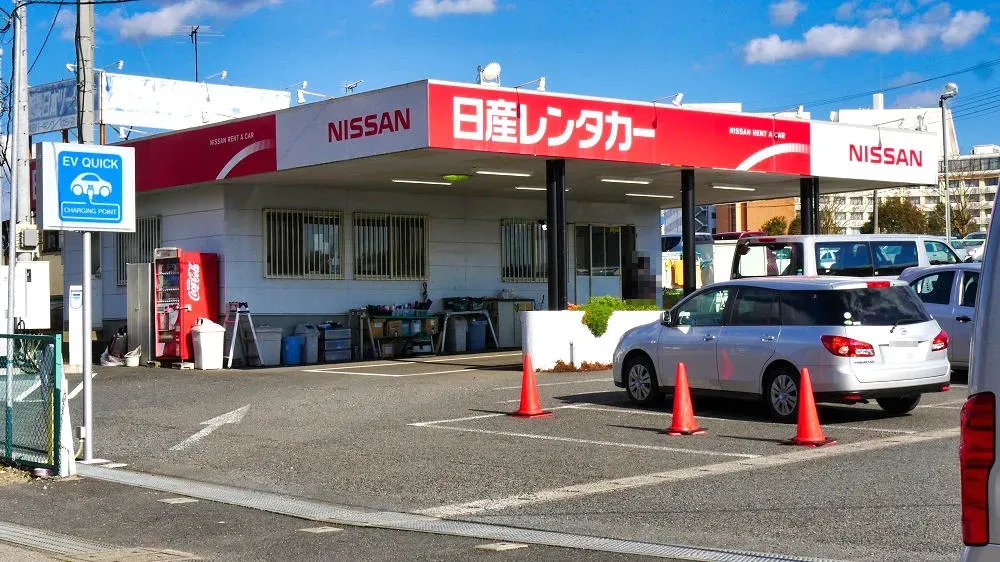
Nissan Rent a Car is a leading car rental service provider in Japan, operated by Nissan Car Rental Solutions Co., Ltd., a subsidiary of Nissan Motor Co., Ltd., Japan's automotive giant. This ensures that every rental car in the system is a Nissan brand vehicle maintained excellently by standard service centers.
Nissan Rent a Car's services range from small Kei Cars to Minivans for large families and cutting-edge electric vehicles (EV). They have branches throughout Japan, including at airports, Shinkansen stations, and major business districts, suitable for all types of customers, both business travelers and tourists.
Bookings can be made directly through the official website Nissan Rent a Car, which has English menus to support foreign tourists. Direct bookings with the service provider often come with seasonal offers and promotions, as well as the right to choose comprehensive insurance packages. Meanwhile, booking through agents (OTA) may have price comparison advantages, but renters must carefully check coverage conditions.
5 Nissan Rent a Car branches convenient for tourists Choosing pickup and return branches is important for trip planning. Here are 5 main branches of Nissan Rent a Car Japan located near important transportation hubs:
Narita International Airport Branch (Chiba) Located within the airport area (Terminal 1 and Terminal 2), with shuttle bus service between the passenger building and the rental counter. Suitable for tourists landing at Narita and wanting to drive towards Mount Fuji, Nikko, or the Kanto region without carrying luggage into the city.
Haneda Airport Branch (Tokyo) Located close to Haneda Airport, very convenient for flights landing near central Tokyo. Suitable for trips wanting to drive to the Kanagawa side, Yokohama, or Hakone immediately.
Tokyo Station Branch (Nihonbashi Exit) Located in the heart of the capital, near Tokyo Station which is the central hub of the Shinkansen. Suitable for tourists who took the train from other cities and want to rent a car to drive around Tokyo or surrounding areas.
Shin-Osaka Station Branch The transportation hub of the Kansai region. This branch is suitable for tourists traveling by Shinkansen to Osaka and wanting to rent a car to drive to Kyoto, Nara, Kobe, or Wakayama.
New Chitose Airport Branch (Hokkaido) A popular branch for those traveling to Hokkaido, since train travel in Hokkaido is limited and tourist spots are far apart. Picking up a car at New Chitose Airport is the best starting point for driving around this region.
(Note: It's recommended to check the operating hours of each branch through the official website before booking, as some branches may not be open 24 hours.)
Why choose Nissan Rent a Car in Japan
New and fuel-efficient vehicles: Experience the latest Nissan technology such as the e-POWER drive system that saves fuel and responds well to acceleration.
Intelligent safety technology: Many models come with ProPILOT semi-autonomous driving system, blind spot warning system, and Intelligent Around View Monitor that makes distance judging for parking in Japan much easier.
Comprehensive branch network: You can choose to pick up and return at different branches (One-Way Drop off) within specified regions or prefectures (may have additional fees).
Maintenance care: You can be confident in performance and cleanliness since they're maintained directly by the manufacturer.
Suitability for all travel: There are diverse vehicle options meeting needs from solo travelers to large families.
Overview of the Japanese car rental market
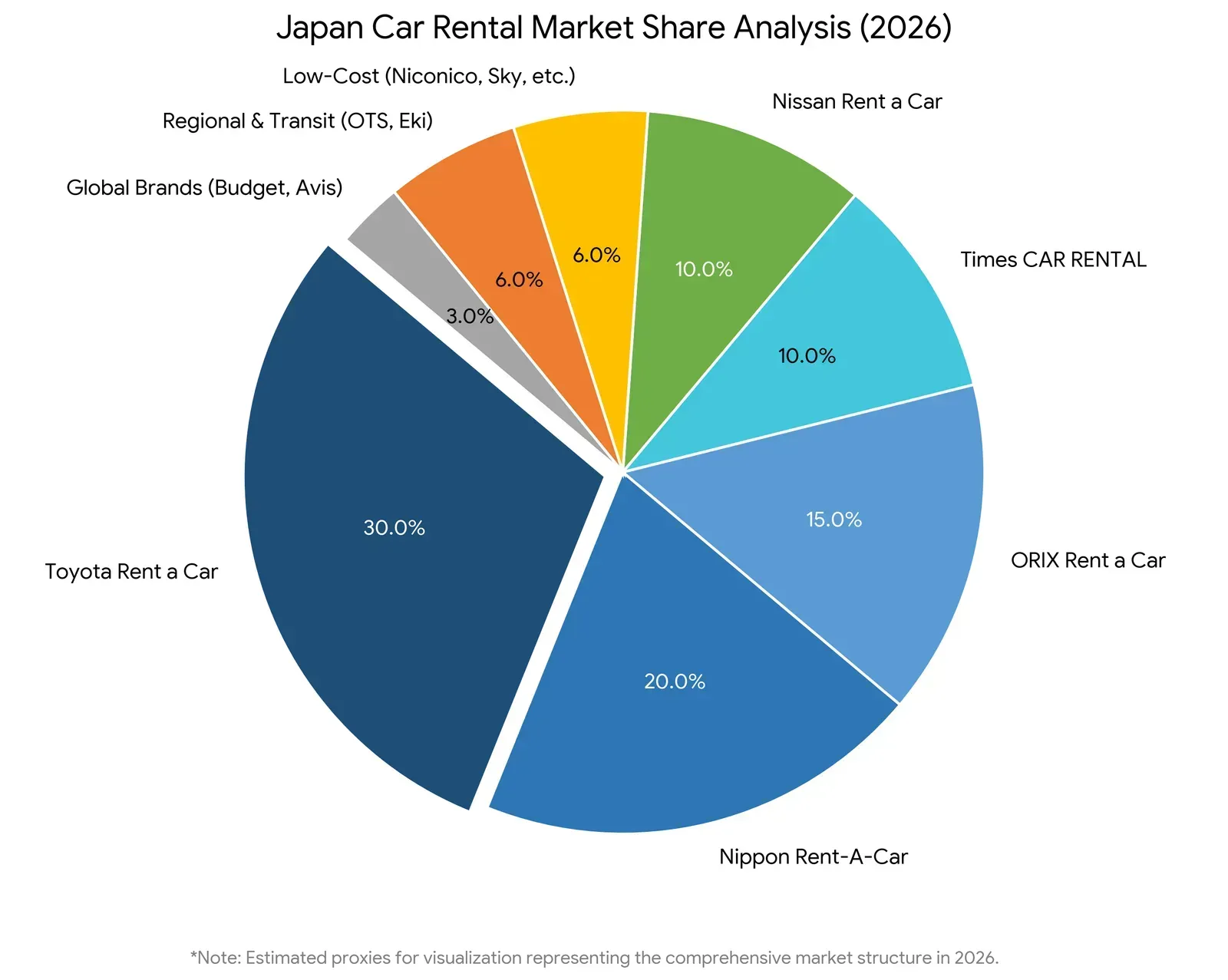
The car rental market in Japan has very high standards, focusing on safety, cleanliness, and punctuality. Major service providers are usually subsidiaries of automakers themselves (such as Nissan Rent a Car, Toyota Rent a Car) or specialized car rental companies (such as ORIX Rent a Car, Nippon Rent-A-Car), with each brand having its own strengths and customer base. Market competition benefits tourists as it leads to complete supplementary services such as multilingual navigation systems (GPS), ETC (Electronic Toll Collection) cards, and 24-hour emergency assistance.
What types of vehicles does Nissan Rent a Car offer
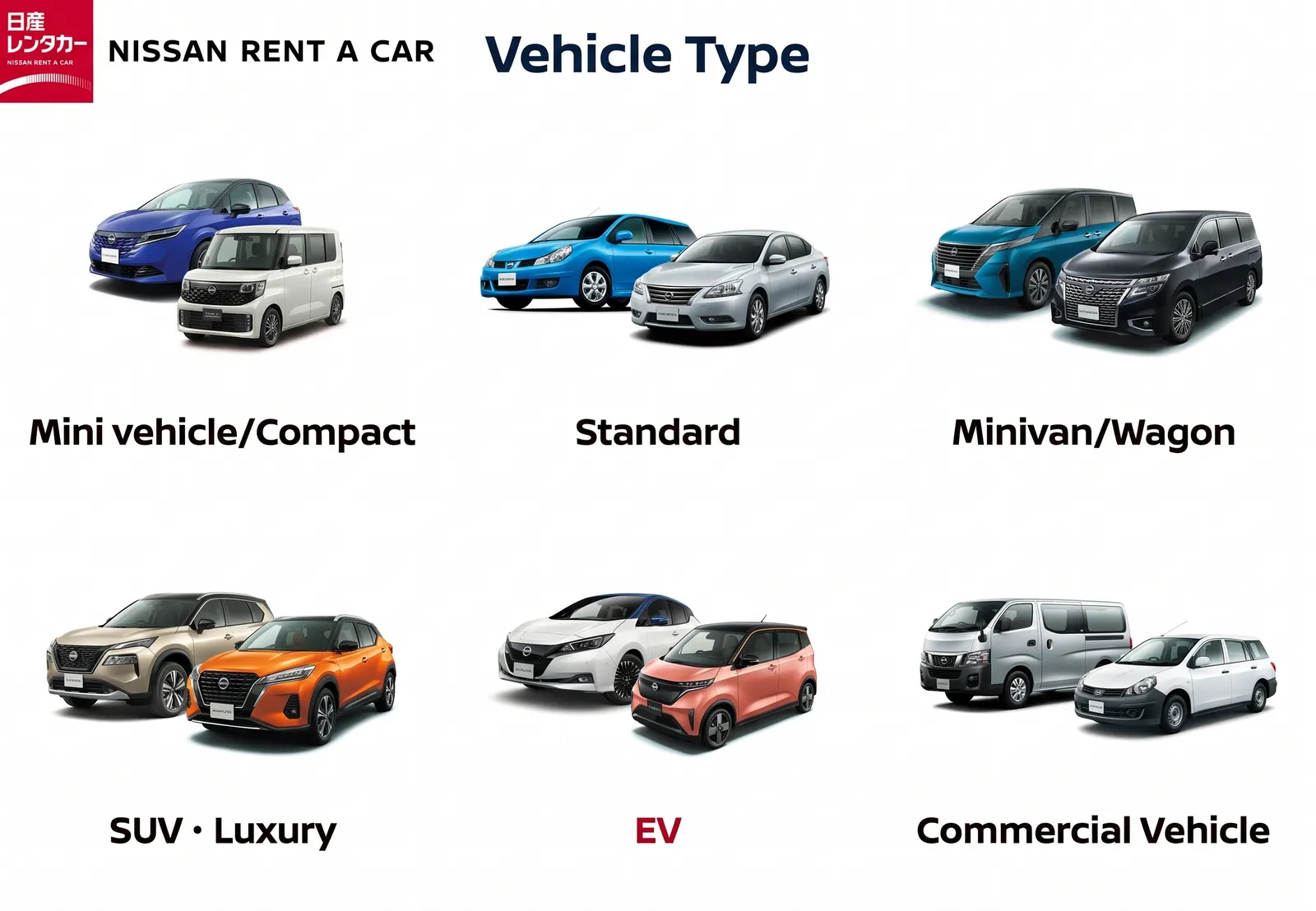
Vehicle type is crucial to your travel experience. Nissan Rent a Car clearly categorizes their vehicles. Before deciding to book, you should carefully check the vehicle types and classes:
1. Small vehicles (Kei Car / Moco, Dayz)
660cc vehicles that stand out for their agility, easy parking, and excellent fuel economy. Suitable for 2 people with medium luggage, not suitable for climbing steep mountains or driving long distances on expressways.
2. Compact vehicles (Note, March)
Popular among 2-3 person tourist groups. The Nissan Note e-POWER is the most popular choice with a spacious cabin, excellent fuel economy, and can fit 2 suitcases sized 24-28 inches.
3. Sedan (Sylphy, Skyline)
4-door cars that provide comfortable driving experience, suitable for long-distance intercity trips with clearly separated trunk space. Suitable for 3-4 people executives or tourists.
4. SUV (X-Trail, Kicks)
For adventure lovers, winter driving, or mountain climbing. The X-Trail has spacious interior, excellent visibility, and often offers 4WD (4-wheel drive) options in snowy areas.
5. Minivan for families (Serena, Elgrand)
7-8 seater vehicles, the best choice for family trips. Nissan Serena is a popular model with spacious interior and easy entry/exit, but calculate luggage space carefully. If all 8 seats are filled, luggage space will be limited. It's recommended to have 5-6 passengers to leave room for suitcases.
6. Electric vehicles (EV) (Leaf, Sakura, Ariya)
For those wanting to go green and experience full EV technology, Nissan offers Leaf and Sakura, but renters must plan charging stations along their route carefully.
How much does Nissan Rent a Car Japan cost
Car rental prices in Japan are not fixed but depend on various factors:
Vehicle type (Car Class): Kei Cars are cheaper than SUVs or Minivans.
Rental duration: The longer you rent, the cheaper the daily average rate becomes.
Season: During High Season (cherry blossoms, autumn leaves, Golden Week) there may be High Season Surcharges.
Add-ons: ETC card rental fee, child car seat, snow tires.
One-Way Return Fee: Free if within specified radius, but crossing prefectures or regions will have transfer fees based on distance.
Japanese car rental insurance you should know (CDW and NOC)
Before looking at pricing tables, it's necessary to understand Japan's insurance system, which Nissan Rent a Car offers basic coverage and supplementary packages:
CDW (Collision Damage Waiver): Waive responsibility for the first portion of damage in case of accident.
NOC (Non-Operation Charge): Compensation for when the car needs repairs and loses business opportunity (usually 20,000 yen if the car can be driven back and 50,000 yen if it cannot).
NAS (Nissan Premium Support): The highest package covering CDW, NOC protection, tire and battery emergency replacement service. Highly recommended for foreign tourists for peace of mind.
Sample daily cost estimate table (excluding fuel and expressway)
The figures below are only reference estimates for planning purposes. Please check actual prices on your desired booking date through the Nissan Rent a Car website.
Expense Item | Compact Car (e.g. Note) | Minivan (e.g. Serena) | Notes |
Car rental (per 24 hrs) | ~ 7,000 - 9,000 yen | ~ 15,000 - 18,000 yen | May have High Season Surcharge |
NAS insurance (Full Coverage) | ~ 1,650 yen / day | ~ 2,200 yen / day | Highly recommended for peace of mind |
ETC card rental | ~ 330 yen / rental | ~ 330 yen / rental | Blank card, pay actual expressway fees upon return |
Child car seat (if needed) | ~ 550 - 1,100 yen / day | ~ 550 - 1,100 yen / day | Japanese law mandates use for children under 6 years |
Total daily estimate | ~ 9,000 - 11,000 yen | ~ 18,000 - 21,500 yen | Excluding actual fuel and expressway fees |
How to book Nissan Rent a Car step by step
For confidence, follow these 10 steps to book your car in advance:
Access the website: Go to https://nissan-rentacar.com/th/notes/howto-reservation
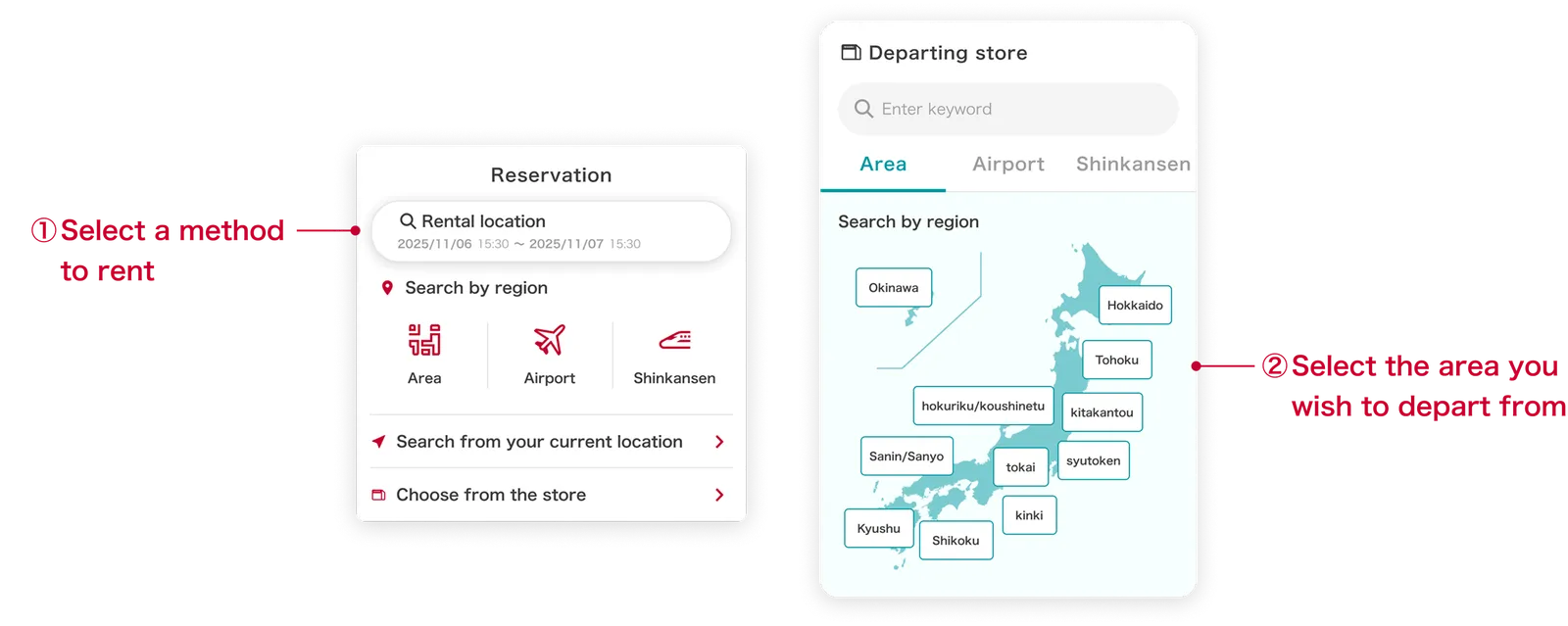
Check information: Read basic rental conditions and required documents.
Search for branch and date: Select your pickup branch, pickup date and time, return branch, return date and time.
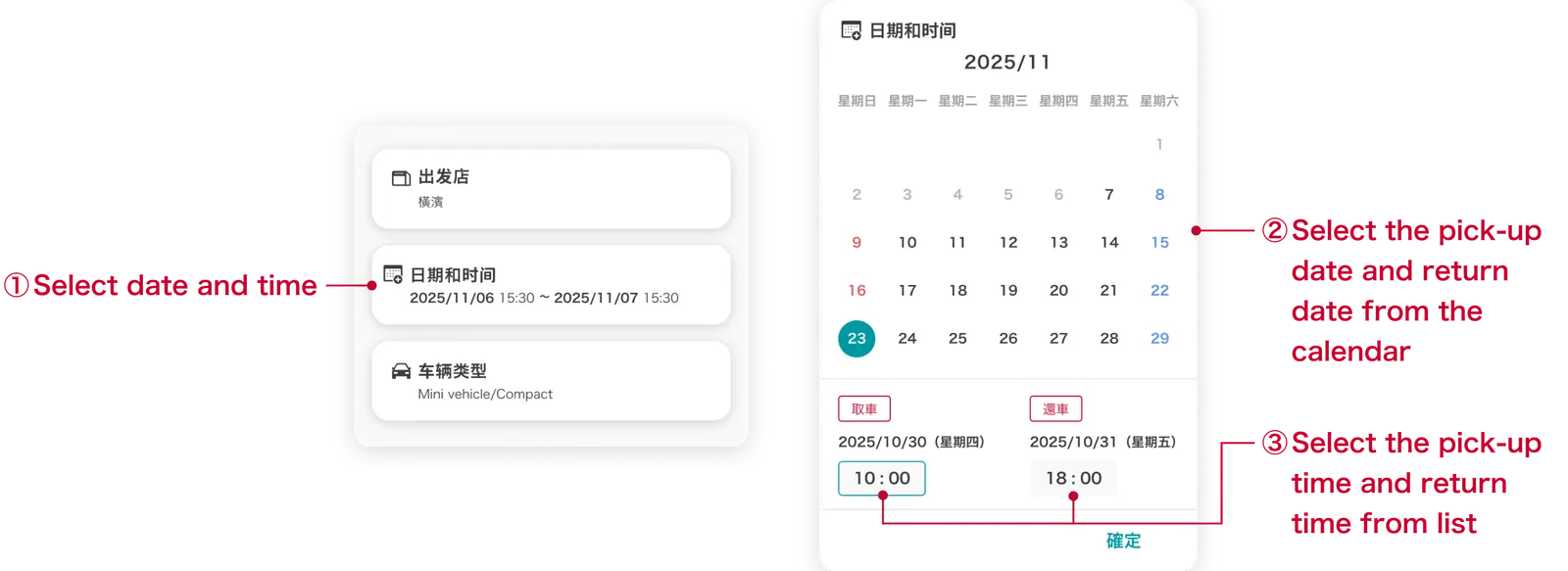
Choose vehicle type: The system will show available vehicle types. Choose the one suitable for the number of people and luggage.
Select insurance plan: The system offers a choice between Standard, CDW, or NAS. It's recommended to choose NAS (Nissan Premium Support).
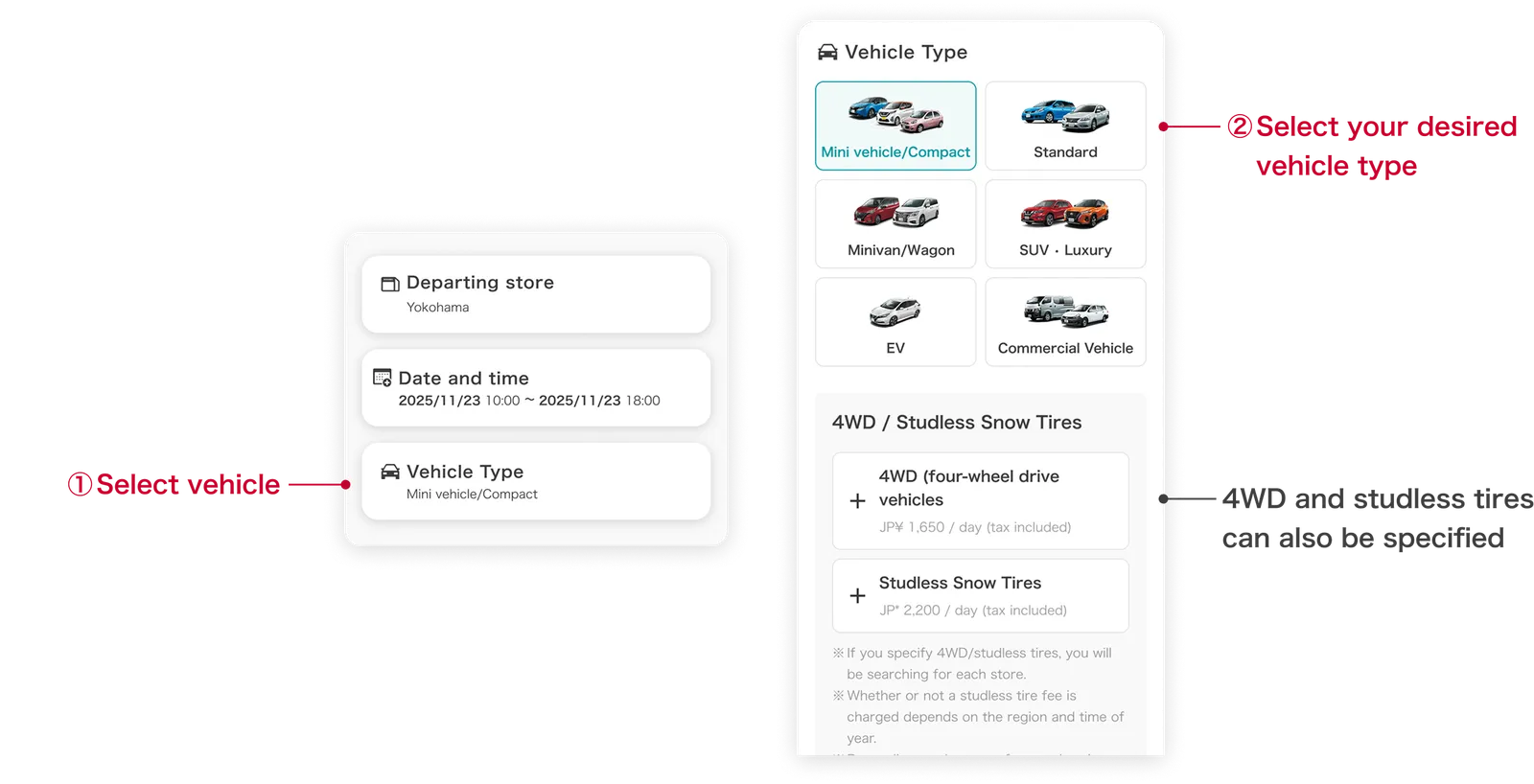
Choose add-ons (Options): Check boxes to select ETC Card, Multilingual GPS navigation system (free but may need advance reservation), or child car seat.
Log in or enter as Guest: Fill in first and last name (matching passport), email, and phone number.
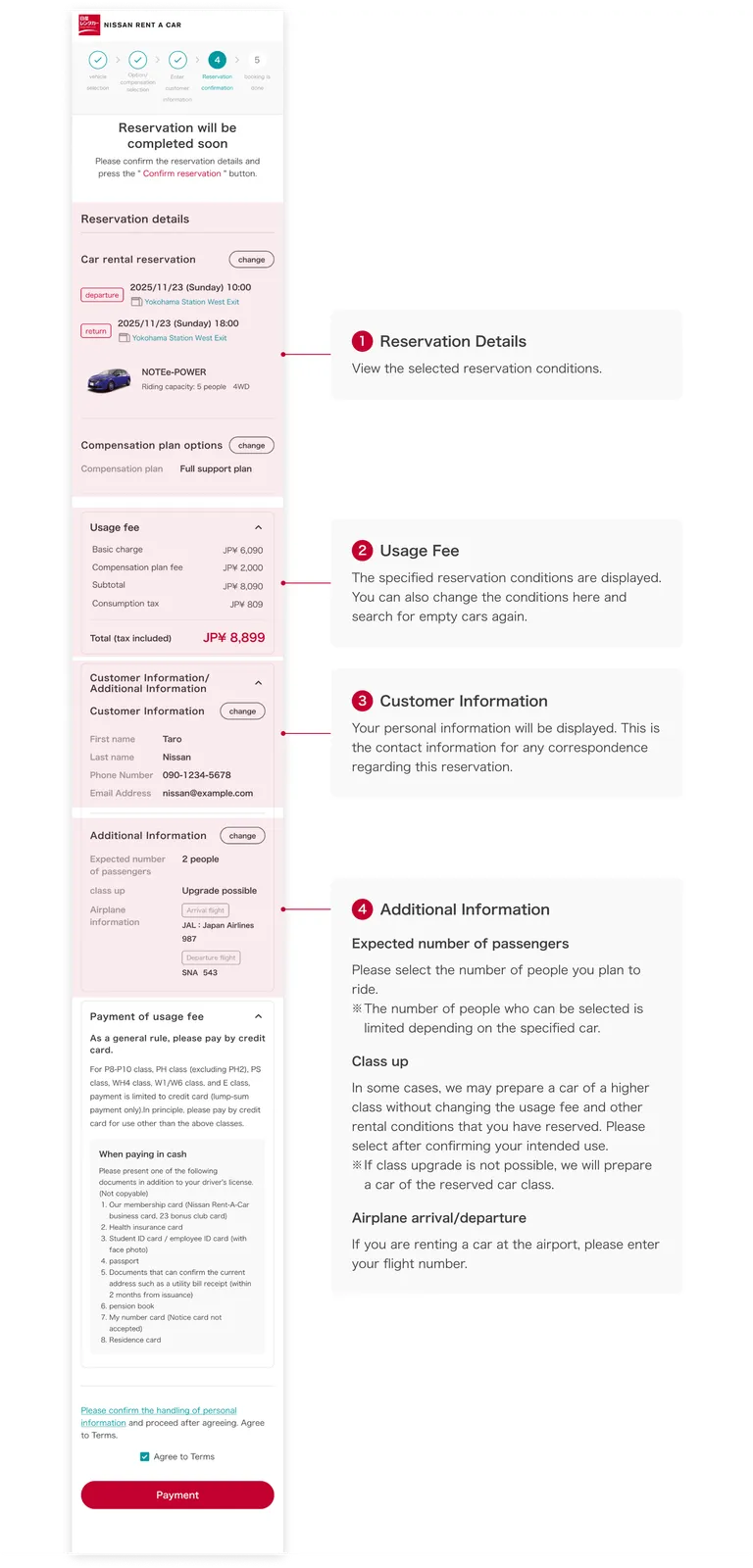
Review details: Review the date, time, branch, vehicle type, and total amount.
Confirm booking: Read the cancellation policy before confirming.
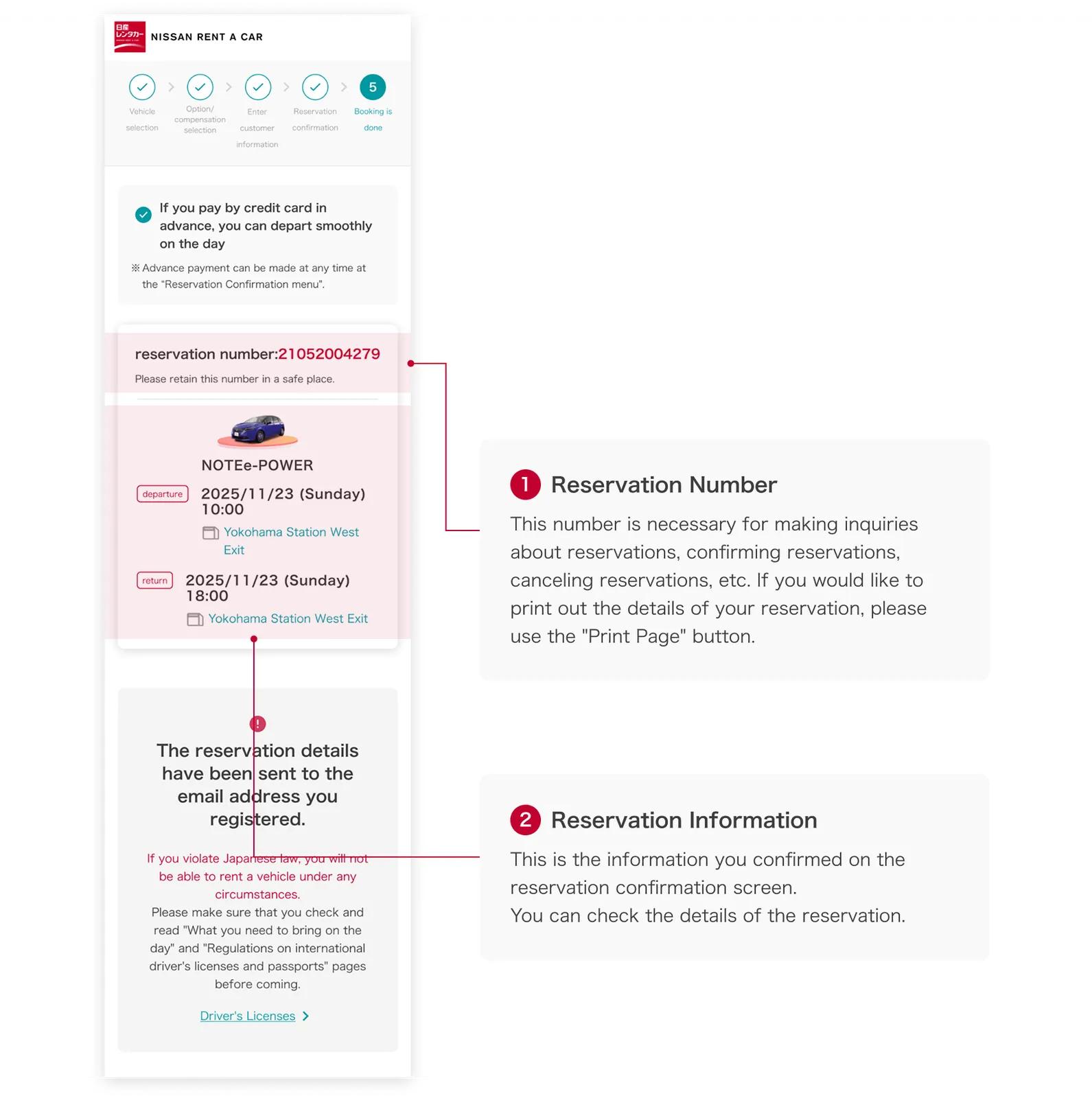
Keep documentation: The system will send a booking confirmation email. Print it or save the screenshot to show the staff on the day of pickup.
Documents needed to rent a car in Japan
Japanese staff are strict about documents. If documents are incomplete or incorrect, the car rental will be rejected immediately with no exceptions. For Thai nationals, prepare these documents:
Passport: Original and not yet expired.
Thai driver's license: Original and not yet expired.
International Driving Permit: Thais must use the International Driving Permit according to the Geneva Convention 1949 only! The booklet will have a white cover. You cannot use the Vienna Convention 1968.
Booking confirmation document: Confirmation email from the website.
Credit card: Must be in the same name as the main driver for payment.
For more information and detailed instructions on obtaining an international driving permit, see: How to obtain an international driving permit for travel to Japan
How to pick up a Nissan Rent a Car in Japan
When you arrive at your booked branch, the car pickup process follows this standard procedure:
Submit documents: Show your passport, international driving permit, Thai driver's license, and booking confirmation to the staff.
Confirm rental and make payment: The staff will explain the conditions, insurance, and precautions, then collect payment (mostly by credit card).
Listen to instructions: If you're renting an ETC card or expressway prepaid pass (such as KEP, HEP), staff will explain how to use it and install it for you.
Inspect vehicle condition: Walk around the car checking for scratches or existing damage with the staff. It's recommended to take photos or videos around the entire car as detailed evidence.
Check interior and fuel: Check the interior condition, verify the tank is full, and have staff explain how to set up the GPS (such as searching destinations by Mapcode or phone number).
Get emergency contact number: Keep the emergency phone number in case of accident or breakdown before driving away from the center.
How to return a rental car in Japan
Fill tank to full (Full to Full): Stop at a gas station near the return branch (usually within 3-5 kilometers) and fill up completely. Keep the fuel receipt to show staff as proof of recent fill-up.
Allow travel time: Arrive at the return branch at least 30-45 minutes before your return time. Late returns will incur late fees per hour at a high rate.
Check personal belongings: Don't forget to check for phones, chargers, wallet, etc. in storage compartments and under seats.
Staff inspects vehicle: Staff will walk around inspecting the car condition and checking fuel level.
Pay additional charges: If you used expressways through the ETC card you rented, staff will print a receipt showing total expressway charges for you to pay by credit card or cash.
Receive complete return documentation: This marks the end of the car rental process.
What you need to know about driving in Japan
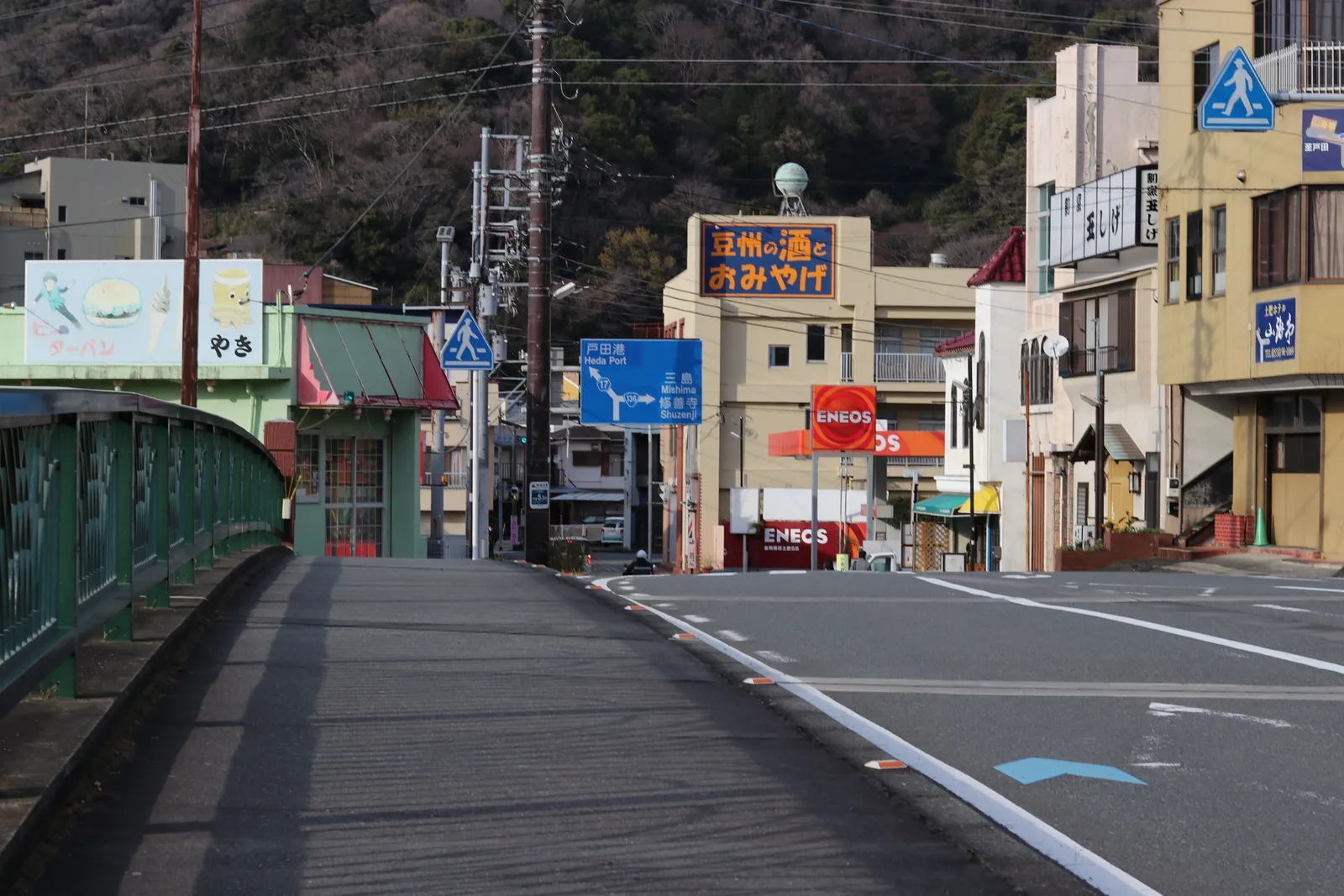
Driving in an unfamiliar country requires caution. Japanese traffic rules are similar to Thailand in that **you drive on the left side of the road, on the left lane**, but otherwise differ significantly and are more strict:
Stop sign (STOP / 止まれ): An inverted triangle with a red border and the characters "止まれ" (Tomare) is absolute! When you encounter this point, **you must brake the car to a complete stop with the wheels locked.** Look left and right clearly before proceeding. Slowly rolling through is considered a traffic violation and results in a heavy fine.
Crosswalks and pedestrians: Pedestrians are gods in Japan. If you see someone waiting to cross at a crosswalk, all cars must stop to let them pass first.
Speed limit (Speed Limit): Generally in urban areas it's 40-50 km/h and on expressways 80-100 km/h. Speed cameras are common.
Using expressways and ETC: Japanese expressways are quite expensive. It's recommended to rent an ETC card (similar to Easy Pass) to insert in the machine. When passing a tollbooth, enter the purple lane (ETC) and drive slowly at no more than 20 km/h. The barrier will open automatically.
Refueling: Gas stations have both full-service and self-service options. If self-serving, touch the static discharge plate before grabbing the nozzle. Regular gasoline usually has a red nozzle.
Drinking and driving law (Zero Tolerance): Japan is very serious about drunk driving. No alcohol in the bloodstream is allowed whatsoever. Passengers riding with a drunk driver will also be fined and punished.
Parking: Don't park on the roadside under any circumstances (unless there's a paid parking sign). You must park in paid parking lots (Coin Parking) only.
Advantages and limitations of renting a car in Japan
To see the full picture, let's compare car rental to the train system:
Travel Factor | Self-Drive Rental | Train and Public Transport |
Flexibility | Maximum - you can stop, rest, take photos, or change plans anytime | Limited - must follow schedule strictly. Missing a train may ruin your plans |
Luggage handling | Easy - throw it in the car trunk. No need to drag up and down station stairs | Difficult - if you have many large suitcases or need to navigate crowded rush hour trains |
Cost | Value for money when split 3-4 people. But has hidden costs (expressway, parking, gas) | Value for 1-2 people or when using a flat-rate pass (like JR Pass) |
Access to nature | Can reach everywhere (countryside, hidden onsens, lakes, mountains) | Limited access - some places require multiple bus transfers |
Traveling in big cities | Traffic, difficult parking, and very expensive parking fees (not recommended in Tokyo/Osaka) | Convenient, fast, and covers the entire city best |
Which car rental company to choose in Japan
The classic tourist question is "Which car rental company is best?" Nissan Rent a Car, Toyota Rent a Car, ORIX Rent a Car, and Nippon Rent-A-Car are all national standard companies. The decision usually depends on:
Car brand preference: If you like Nissan cars (Note, X-Trail), choose Nissan Rent a Car. If you prefer Yaris or Alphard, choose Toyota.
Price and promotions at the time: Sometimes OTA agents or the company website have 10-20% discount campaigns.
Branch location: Which company has the most convenient branches near your hotel or landing airport? Large brands like Nissan Rent a Car typically have the advantage of complete branch coverage at important locations.
For those still undecided, you can read more advice on car rental in Japan overview to help with your decision.
Frequently asked questions about Nissan Rent a Car (FAQ)
1. What is Nissan Rent a Car? A car rental service company in Japan operated directly by the Nissan Motor subsidiary, offering new Nissan models at high standard service center quality.
2. How can I book a Nissan Rent a Car? You can book directly through the official website (https://nissan-rentacar.com/english/) which has English menus for foreign tourists, or through various agents (OTA).
3. Can Thai nationals book and rent a car? Yes, absolutely. You just need a valid passport, Thai driver's license, and an international driving permit according to the Geneva Convention 1949.
4. What does Nissan Rent a Car charge from the start? For compact cars (like Nissan Note), it typically starts at around 7,000 - 9,000 yen per day (excluding top insurance and add-ons).
5. What type of international driving permit do I need? For Thai nationals, you must use the Geneva Convention 1949 (white booklet) only.
6. Can I pick up and return at different branches (One-way Rental)? Yes, you can specify the return branch during booking. If within the same prefecture it may be free, but returning across prefectures will have a transfer fee based on distance.
7. Do you have vehicles for large families or friend groups? There are Minivan options like Nissan Serena (7-8 seater) or Elgrand as popular choices for families.
8. How far in advance should I book? You should book at least 1-2 months in advance. If traveling during High Season (cherry blossoms, snow, New Year), book 3 months ahead, as vans and 4WD vehicles fill up quickly.
9. Does the rental price include insurance? Basic rental typically includes third-party liability insurance, but does NOT include CDW and NOC. We recommend purchasing the additional NAS (Nissan Premium Support) package during booking.
10. What happens if I return the car late? A Late Charge will be applied per hour at a rate set by the company. If you realize you'll be late, call the branch or Call Center in advance.
11. Can I cancel or modify my booking? You can do it through the website before your travel date according to their policy. If cancelled close to the date (like within 7 days before pickup), there may be a Cancellation Fee.
12. How do I pay for expressway and fuel? You pay for fuel yourself based on what you use (pick up full, return full). For expressways, it's recommended to rent an ETC Card to insert in the car, drive through the toll booth first, then the staff will charge you when you return the car.
13. What should I check before driving away from the branch? Walk around checking for scratches and take videos. Check spare tire, oil level, get the emergency number, and have staff change the GPS to English.
14. How should I prepare for winter driving? If traveling to Hokkaido or snowy areas, specify to rent snow tires when booking. Rent a 4WD vehicle for maximum safety.
Who is Nissan Rent a Car suitable for
Considering all services, Nissan Rent a Car is an excellent choice for:
Families with children or elderly members: Convenient for moving patients or strollers without long walks or climbing train stairs.
Friend groups of 4 or more: When dividing rental cost by number of people, it's often cheaper than buying JR Pass or regional train passes.
Nature photography enthusiasts: Want unlimited time for sunrise/sunset light at lakes, mountains, or traditional villages.
Technology lovers: Want to experience Nissan's famous e-POWER system or ProPILOT driver assistance technology.
Conversely, car rental is NOT suitable for solo travelers or couples staying only in big cities like Tokyo and Osaka, where the train system is more convenient, cheaper, and eliminates parking headaches.
Summary: Drive through Japan for fun and safely by preparing thoroughly before your trip
Renting a car and driving in Japan with Nissan Rent a Car is truly a liberating travel experience. With comprehensive branch coverage, quality Nissan vehicles, and insurance systems that give foreign tourists peace of mind, the most important thing is to book your car early, prepare your international driving permit (Geneva 1949) correctly, understand traffic rules (STOP signs, zero alcohol policy), and choose the highest coverage insurance with no deductible.
Before booking, don't forget to check the latest prices and conditions on the Nissan Rent a Car official website.
About the author

Nattamon Khonngam
Online Marketing
Bachelor of Business Administration, Kasetsart University (2014-2018)
Master’s Degree in Marketing and Management, Western University (Current)
Online Marketer, specializing in Content Marketing, SEO & Digital Marketing
Skilled in AI, Data Analytics, Content Strategy & Digital Marketing