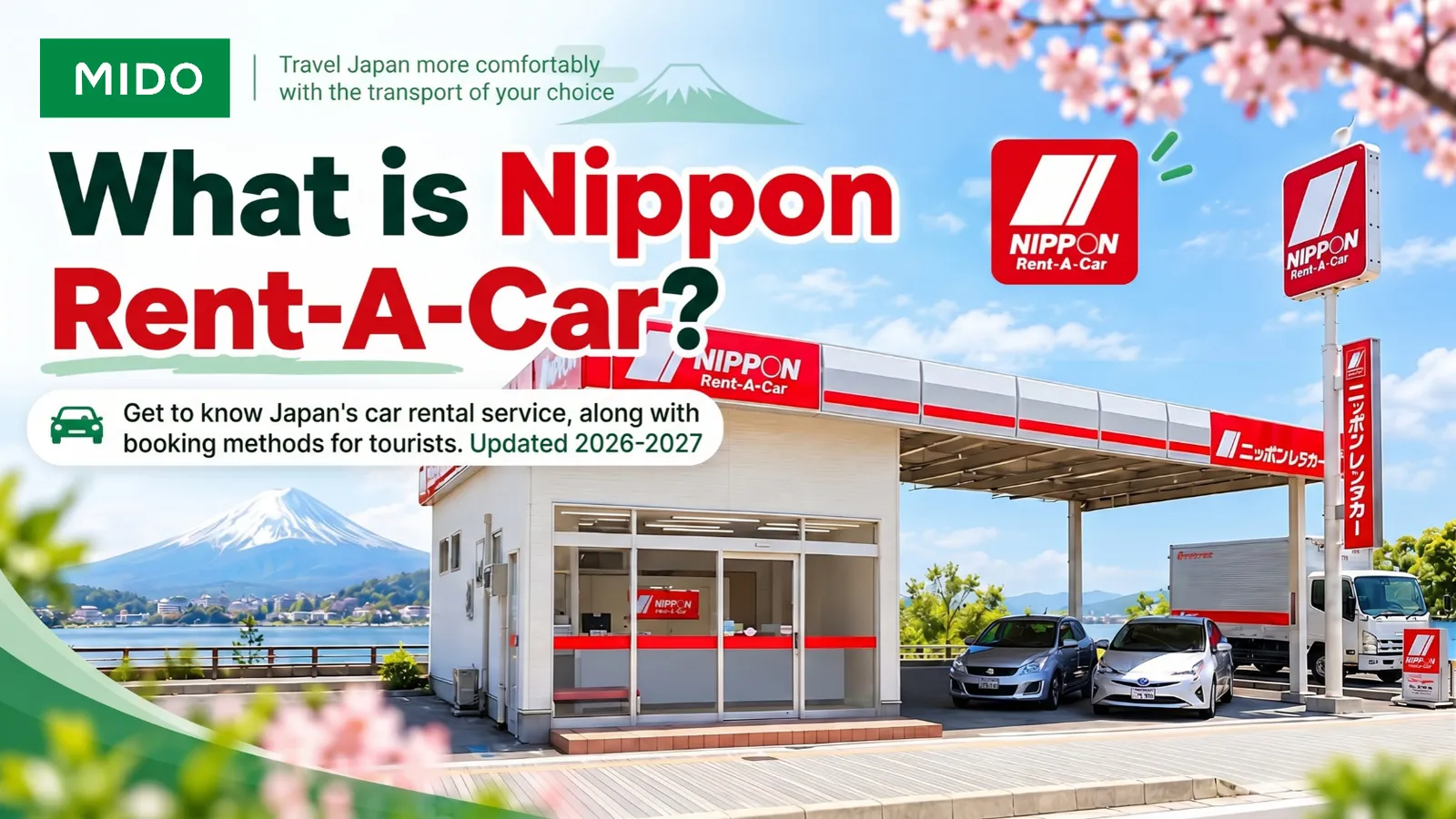
What is Nippon Rent-A-Car Japan? Get to know Japanese car rental services with booking methods for travelers Updated 2026–2027
Nattamon KhonngamPublished on: October 14, 202614 min read81 views
Self-driving tourism in Japan has become very popular among Thai tourists. Although Japan's public transportation system and trains are comprehensive and convenient, for traveling outside the capital, sightseeing in nature, or traveling with a large family, renting a car in Japan for self-drive touring is an option that offers more freedom and flexibility. One of the car rental service providers that tourists are familiar with is Nippon Rent-A-Car.
This article will introduce you to what Nippon Rent-A-Car is, what types of cars are available, which branches are convenient for tourists, approximate rental prices, the steps for booking a rental car in Japan, and how to prepare for an international driver's license so that your self-drive trip in Japan is as smooth as possible. For those looking for travel ideas and destinations during the trip, you can visit 40 attractions in Japan to find beautiful photo spots with a road trip aroundMount Fuji or if you prefer city sightseeing, there's a Tokyo travel guide with coordinates for 40 Tokyo attractions and don't forget to buy souvenirs from Tokyo before returning. If you plan to go down to the Kansai region, try the 40 Osaka attractions list to help plan your driving route.
Who is Nippon Rent-A-Car
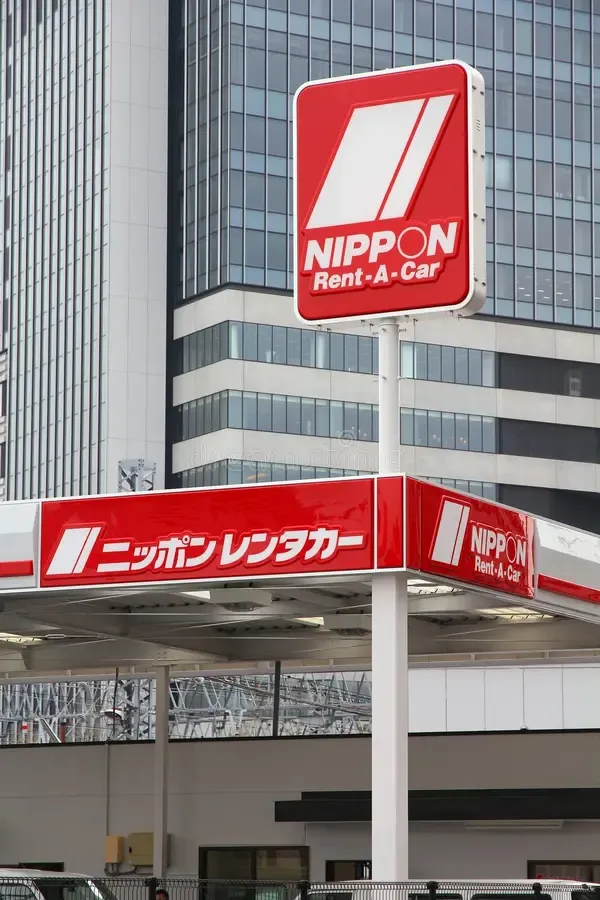
Nippon Rent-A-Car is one of Japan’s leading car rental companies, with a long-standing reputation in the industry. Founded in 1969, the company has approximately 5,787 employees across its corporate group, operates 504 locations in Japan and one additional location in Hawaii, and maintains a fleet of approximately 40,676 vehicles (as of September 2024). It serves corporate clients, individual customers, and international travelers, with locations covering major airports, Shinkansen stations, and city centers throughout Japan.
The highlights of Nippon Rent-A-Car are the standard of new, clean, and well-maintained cars, and a wide variety of car options ranging from small eco-cars to family vans. Additionally, there are services that support foreign visitors, such as English-language navigation systems (GPS) (and some models have Thai language), as well as a website for advance car rental booking that supports English. This makes self-drive car rental in Japan easy.
Booking can be done mainly in 2 ways: booking directly through the official Nippon Rent-A-Car website, which usually provides accurate car information and easy booking management, or booking through travel agent platforms (OTA), which may have promotional price comparisons. However, booking directly with the service provider usually guarantees quick coordination when problems arise or if you want to add special options such as an ETC Card or Snow Tires.
5 Popular and Convenient Nippon Rent-A-Car Branches for Tourists
Nippon Rent-A-Car has branches throughout the country, but for foreign tourists, branches located near major transportation connection points will be most convenient. Here are 5 locations that are suitable for starting your trip:
Narita Airport Branch: Ideal for those flying into Tokyo and wanting to drive to other prefectures immediately, such as Nikko or Kawaguchiko. There is a counter in the passenger terminal with shuttle service to the car pickup location.
Haneda Airport Branch: Closer to central Tokyo than Narita, ideal for trips requiring quick departure. Often has many new car models available.
Kansai International Airport Branch (KIX): A prime location for those wanting to drive in the Osaka, Kyoto, Nara regions or southern Kansai area. Immediately after picking up the car, you can get on the expressway to enter or leave the city.
New Chitose Airport Branch (Sapporo): Renting a car in Hokkaido is essential for travel. This branch is a popular starting point because it's spacious, has many cars available, and during winter, all cars are equipped with snow tires as standard.
Fukuoka Airport Branch: One of the airports closest to the city center in Japan. Ideal for starting a self-drive trip around Kyushu Island, to Beppu, Yufuin, or Kumamoto.
Why Choose Nippon Rent-A-Car in Japan
The decision to choose Nippon Rent-A-Car Japan for your trip has many compelling reasons:
Coverage of destinations: Many branches throughout the country, allowing you to pick up and return cars at different branches (One-Way Rental) if desired (there may be additional fees based on distance), adding flexibility to your planning.
Diverse and new car options: Rental cars in Japan are strictly regulated by law. Most Nippon cars have low usage years and excellent condition.
Access to unseen attractions: Some natural tourist attractions, hilltop shrines, or ancient villages may not be accessible by train, or buses may only run a few times per day. Having your own car saves time and eliminates worries about train schedules.
Equipment for foreigners: Services include ETC Card rental (automatic expressway toll payment system), area expressway passes (Expressway Pass), and complete car seats for children.
Limitations to be aware of: Rental prices may not be the cheapest option compared to small local brands. During peak seasons (such as cherry blossoms or fall foliage), popular models like Minivans may be fully booked months in advance, so early booking is necessary.
Japan Car Rental Market Overview
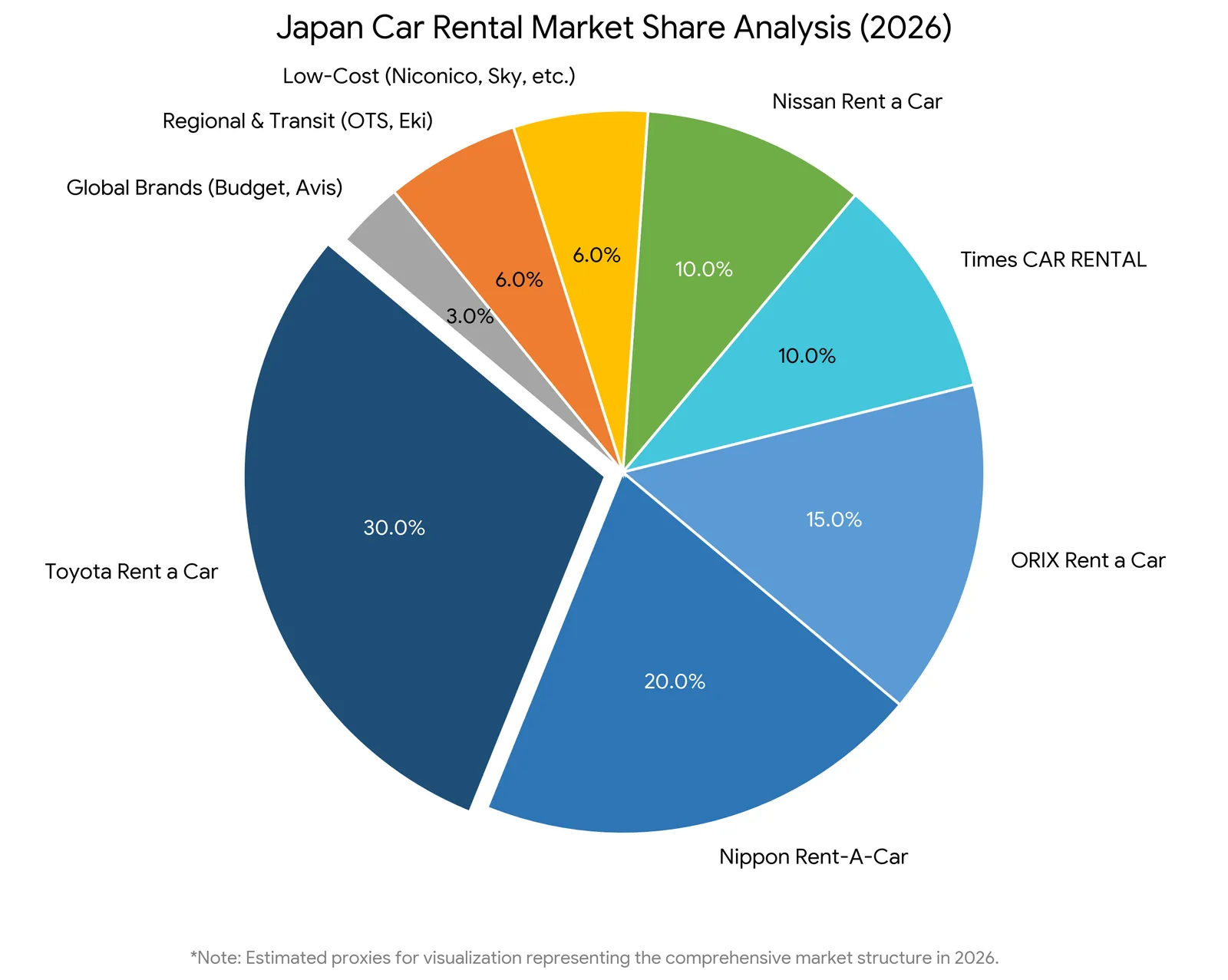
If you're still in the early stages of trip planning and want more information to compare options, you can read reviews and compare the advantages of each service provider at which car rental company is best in Japan? to help you choose a rental car that best suits your travel style and budget.
What Types of Cars Does Nippon Rent-A-Car Offer
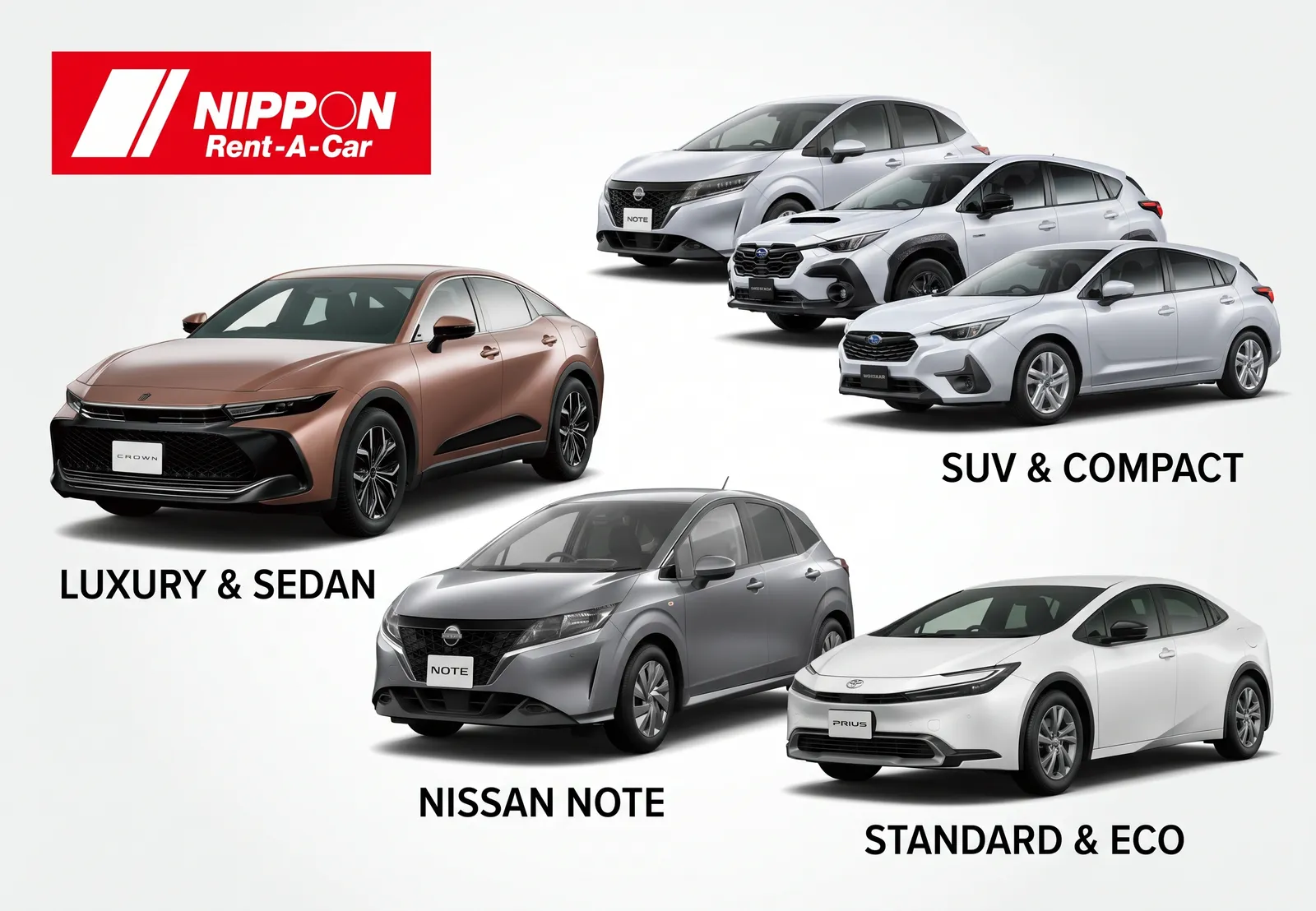
Car options are divided by Class, which reflects size and price, with cars from various manufacturers (such as Toyota, Honda, Nissan, Subaru) mixed together. Example car classes available include K-Cars (Kei Cars), which are 660cc small engine vehicles with yellow license plates designed for maneuvering through cities, easy parking, and fuel efficiency, suitable for 2 travelers with 1-2 medium-sized suitcases but not recommended for long-distance driving or steep hills. Next are Compact cars, which are the most popular class for tourists (such as Honda Fit, Toyota Yaris, Nissan Note) with 1.0 - 1.5 liter engines, seating 4 people comfortably, suitable for 2-3 travelers. If you have 2 or more large suitcases, it's recommended to seat only 2-3 people to fold down the back seats for additional luggage space. For those wanting a more comfortable driving experience, there are Sedan cars, which are 4-door passenger cars (such as Toyota Corolla, Subaru Impreza) that are more comfortable and have a clearly separated trunk, suitable for 3-4 adults. However, if your trip requires some snowy driving, needs good visibility, or needs adequate luggage space, there are SUV options with raised ground clearance (such as Honda Vezel, Subaru Forester). Finally, there are Minivans for families, which are medium and large vans (such as Honda Stepwgn, Toyota Alphard) that are very popular among Thai people, seating 6-8 people (depending on model). If traveling with 4-5 people plus large suitcases, choosing a Minivan will allow everyone to sit comfortably and have enough storage space.
(Check more details about each car class at: Nippon Rent-A-Car Passenger Cars)
Nippon Rent-A-Car Japan Pricing
Rental prices depend on several main factors:
Car class: Small cars are cheaper than family vans
Rental duration: The longer you rent, the lower the average daily cost may be
Time period: During high season (Golden Week, New Year, Songkran), prices may increase
Coverage (Insurance): Adding higher-tier insurance covering initial damage costs (CDW / ECO) increases daily charges
Add-on options: ETC Card rental fees, One-Way fees (pick up and return at different branches), or child car seat rental
Sample Daily Expense Estimation Table (excluding fuel and expressway fees)
This table is only a sample estimate for planning purposes. Actual prices may change according to service providers and promotions.
Expense Item (per day) | Compact Car (e.g., Honda Fit) | Minivan (e.g., Toyota Alphard) | Notes |
Base Rental Rate | ~7,000 - 9,000 yen | ~18,000 - 25,000 yen | Reference price during normal period |
CDW Insurance (liability exemption) | ~1,100 yen | ~2,200 yen | Recommended to purchase every time |
ECO Insurance (full coverage) | ~700 - 1,000 yen | ~1,000 - 1,500 yen | No NOC (Non-Operation Charge) payment if accident occurs |
ETC Card Rental | 330 yen (flat fee per trip) | 330 yen (flat fee per trip) | One-time payment at car pickup (excluding actual expressway toll usage) |
Car Seat (if applicable) | ~550 - 1,100 yen | ~550 - 1,100 yen | Mandatory for children under 6 years old |
How to Book Nippon Rent-A-Car Step by Step
Visit the official website: Go to Nippon Rent-A-Car website
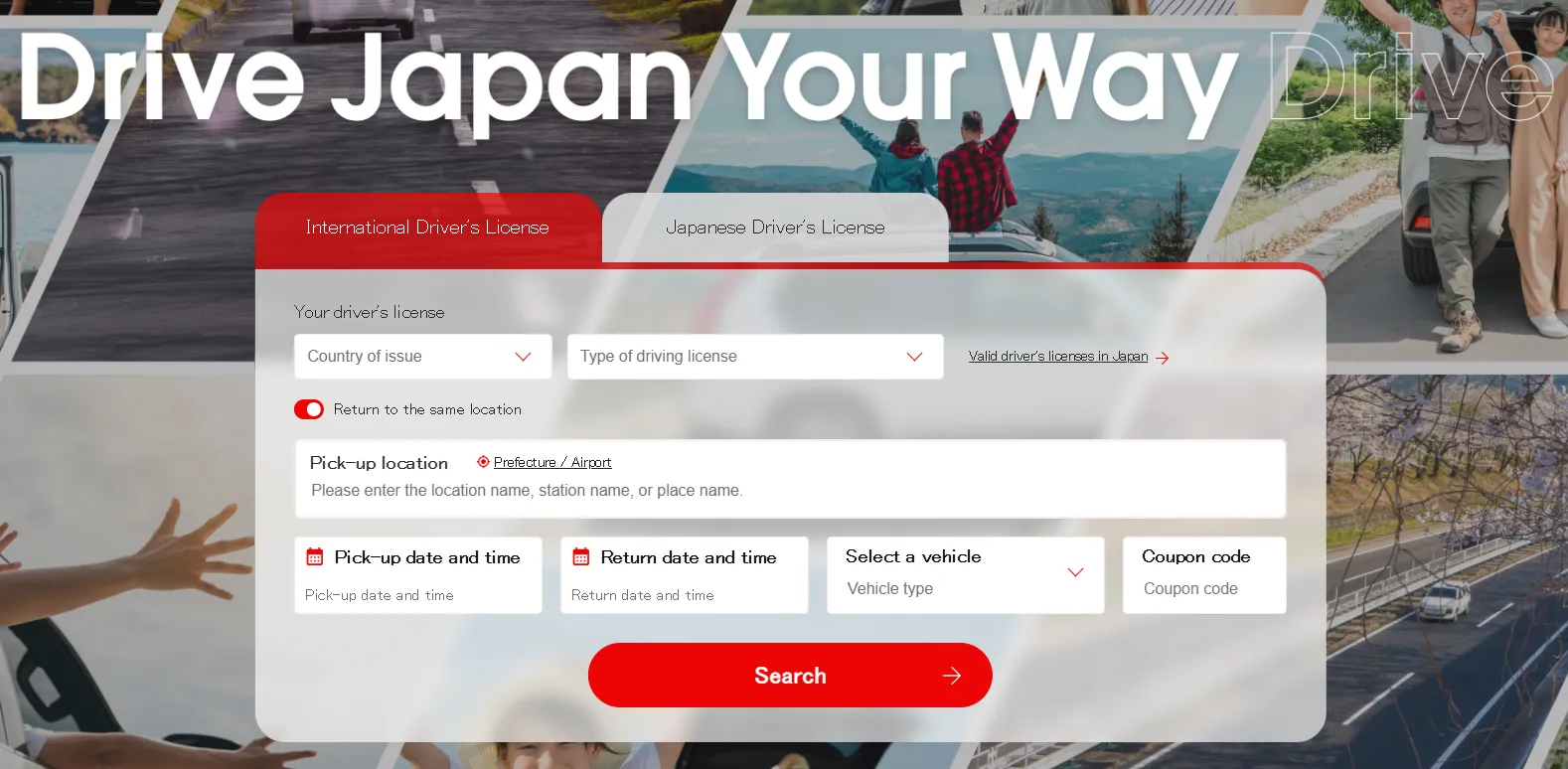
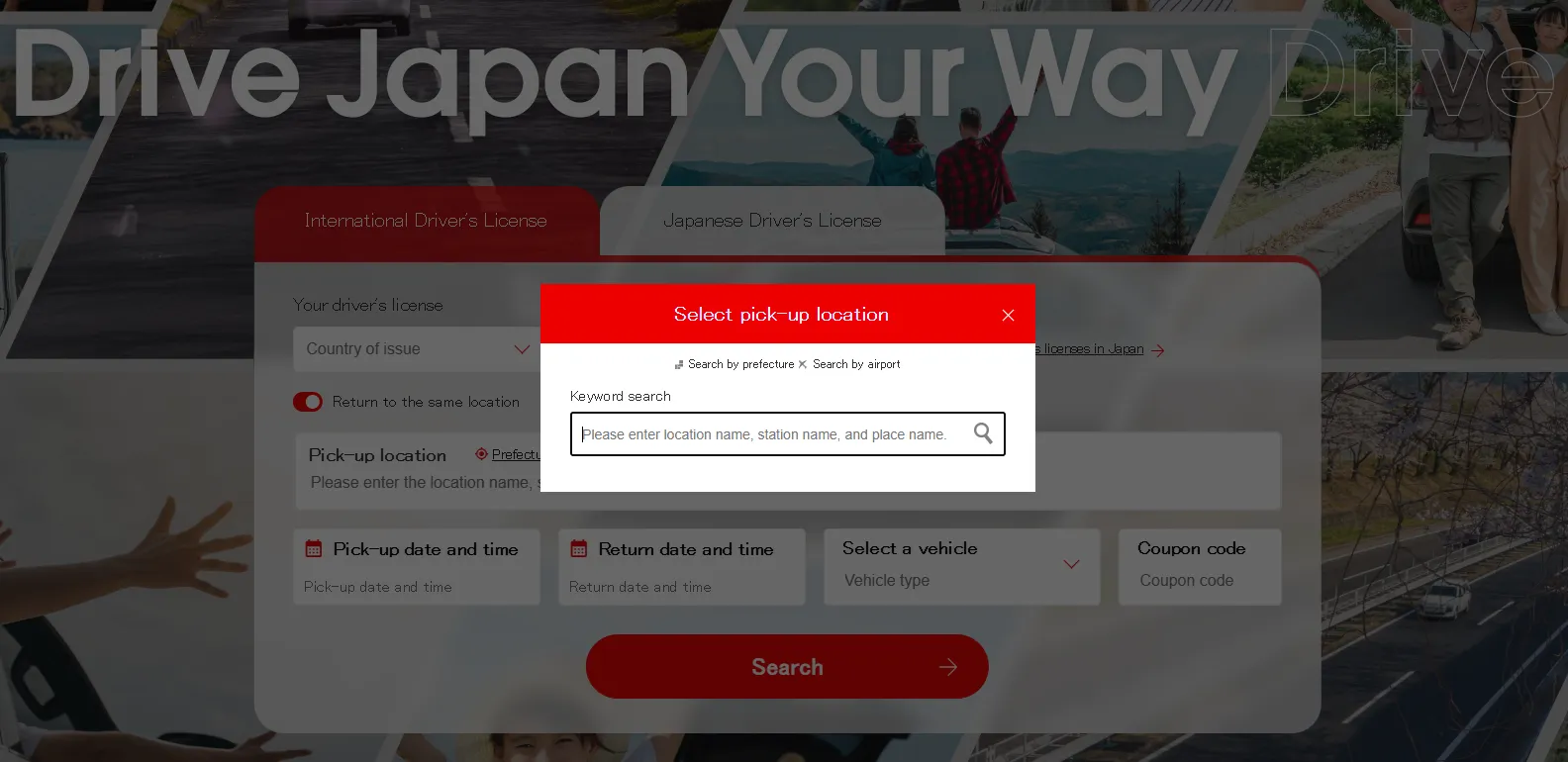
Specify conditions: Select car pickup branch, return branch (if returning at a different location), and specify pickup and return date and time
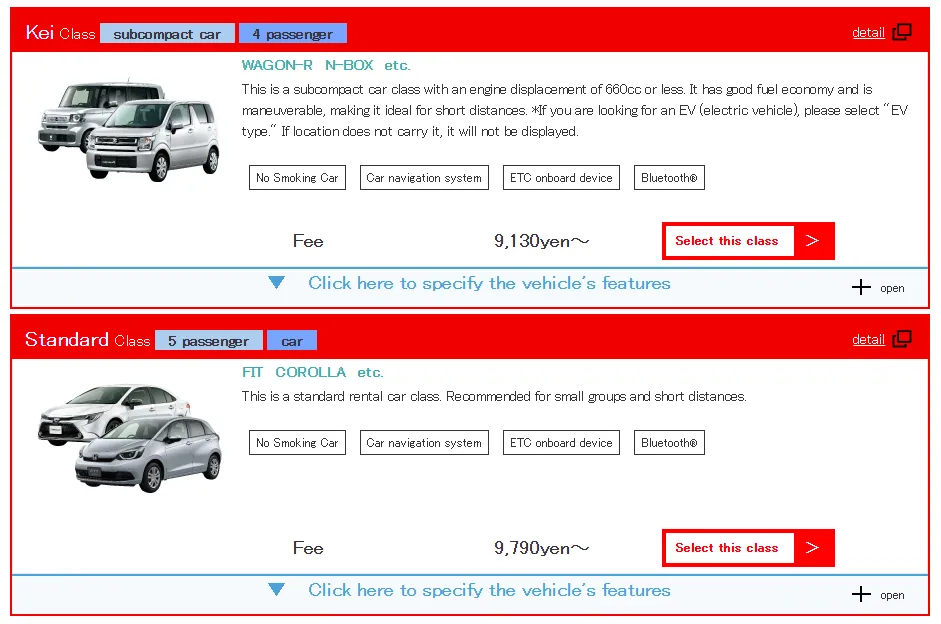
Select car type: The system will display available cars in different classes. Click to select the class suitable for the number of passengers and luggage
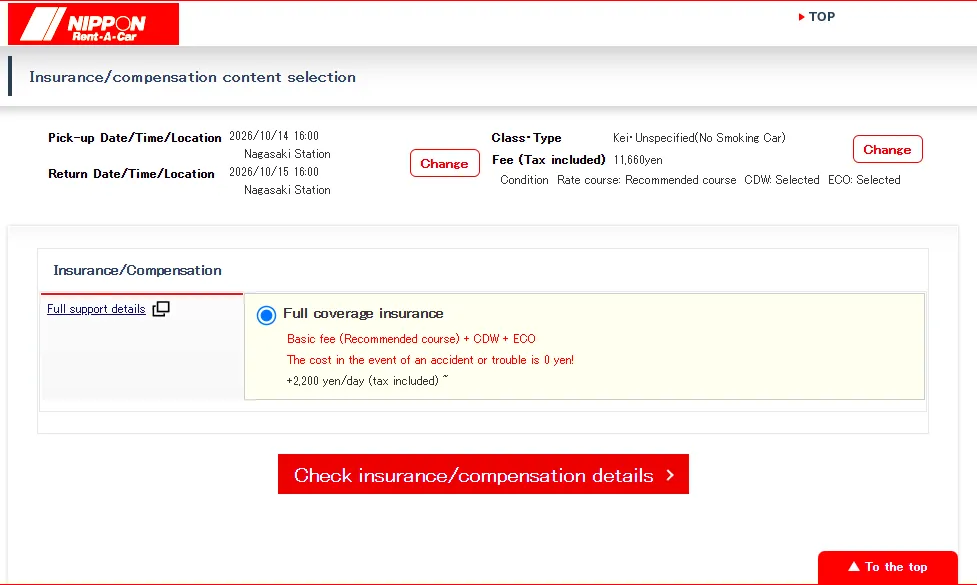
Choose insurance package: It's recommended to select the highest coverage insurance (ECO or similar name in the system) for peace of mind while driving
Add-on equipment: Check to select ETC Card, Car Seat, or expressway pass (if available at that branch)
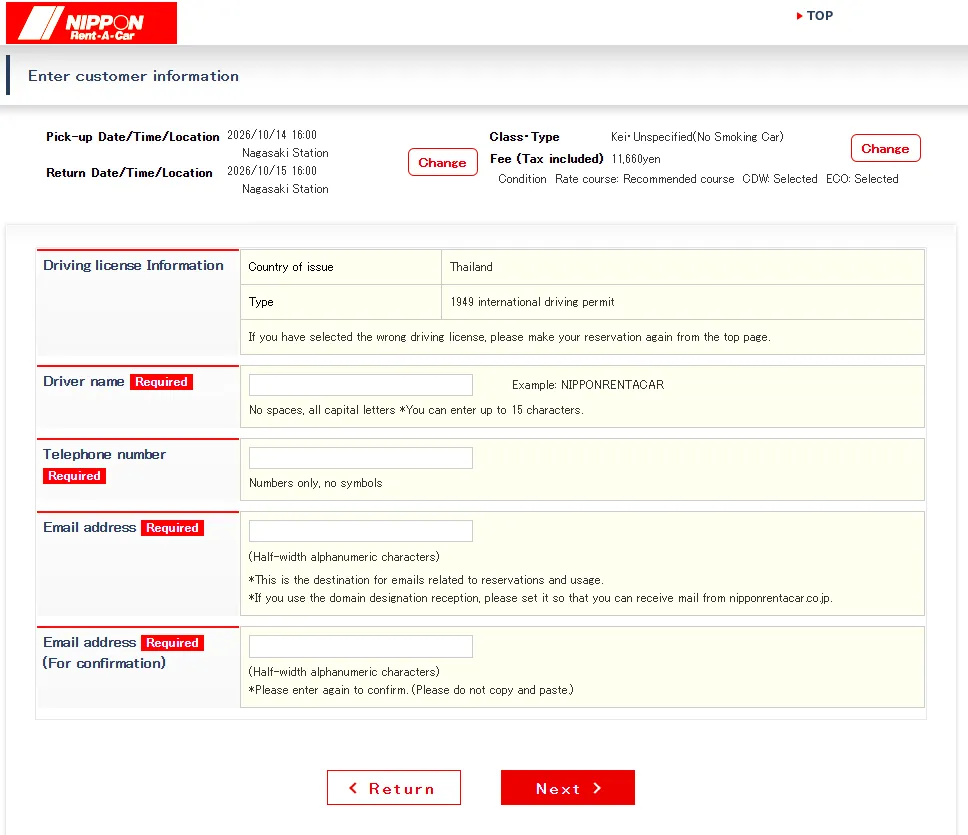
Fill in renter information: Enter name and surname to match your passport, email, and phone number
Review details: Check the total price, cancellation policy carefully
Confirm booking: Complete the booking (in some cases you may need to charge your credit card in advance or pay at the counter). After that, the system will send you a Confirmation Email. Take a screenshot or print it for your records
Documents Required for Renting a Car in Japan
To be able to pick up a car without problems, Thai tourists need to prepare the following documents:
Passport: Original booklet that has not yet expired
Thai Driving License: Original (to serve as reference evidence)
International Driving Permit: Very important! Japan only accepts an International Driving Permit according to the "Geneva Convention 1949" (white cover with Japanese language page). If you bring an International Driving Permit under the Vienna Convention 1968, you will not be able to rent a car under any circumstances
Booking confirmation document: Confirmation email
Credit card: The primary renter should have a credit card in their name to pay the rental fee and provide a security deposit
Learn the document preparation process in detail at: How to obtain an international driving license for traveling to Japan
How to Pick Up a Nippon Rent-A-Car in Japan
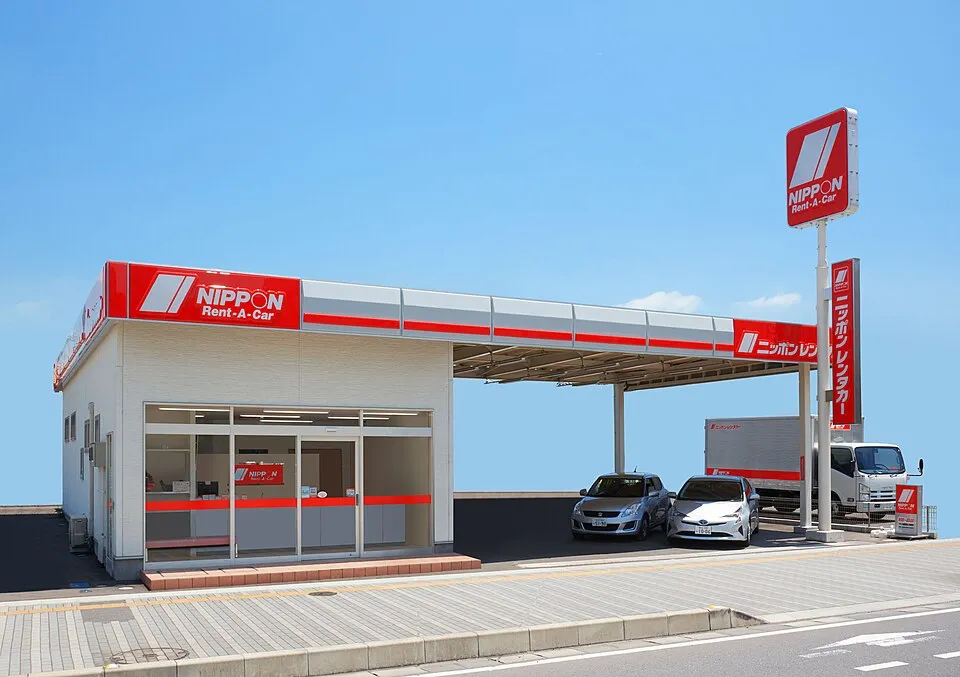
Go to the counter: Present all documents to the staff
Listen to explanations: Staff will explain the insurance, emergency phone number, and car return conditions (such as having to fill up with gas at which pump station)
Inspect car condition: Walk around the car with staff to check for any scratches. If there are any, have the staff record them on paper. It's recommended to use your phone to record a video around the car as evidence
Check interior systems: Start the car and test the air conditioning, headlights, turn signals, and have staff show you how to set up the GPS (most commonly searched by phone number or Mapcode, which is most accurate)
Insert ETC Card: Have staff insert the card into the reader properly before leaving
How to Return a Rental Car in Japan
Fill up with full tank (Full to Full): Must stop at a gas station closest to the return branch (usually not exceeding 5 km radius), fill up to full tank (Regular = red nozzle), and must keep the gas receipt to show to staff
Clear trash and belongings: Check for personal items thoroughly
Check condition: Staff will walk around the car checking for damage. If there's nothing damaged, proceed to payment
Pay for expressway fees: If you rented an ETC Card, staff will remove the card and insert it into the reader to calculate total expressway fees you've driven, then charge your credit card for that amount
Receive receipt: The process is complete
What You Need to Know About Driving in Japan
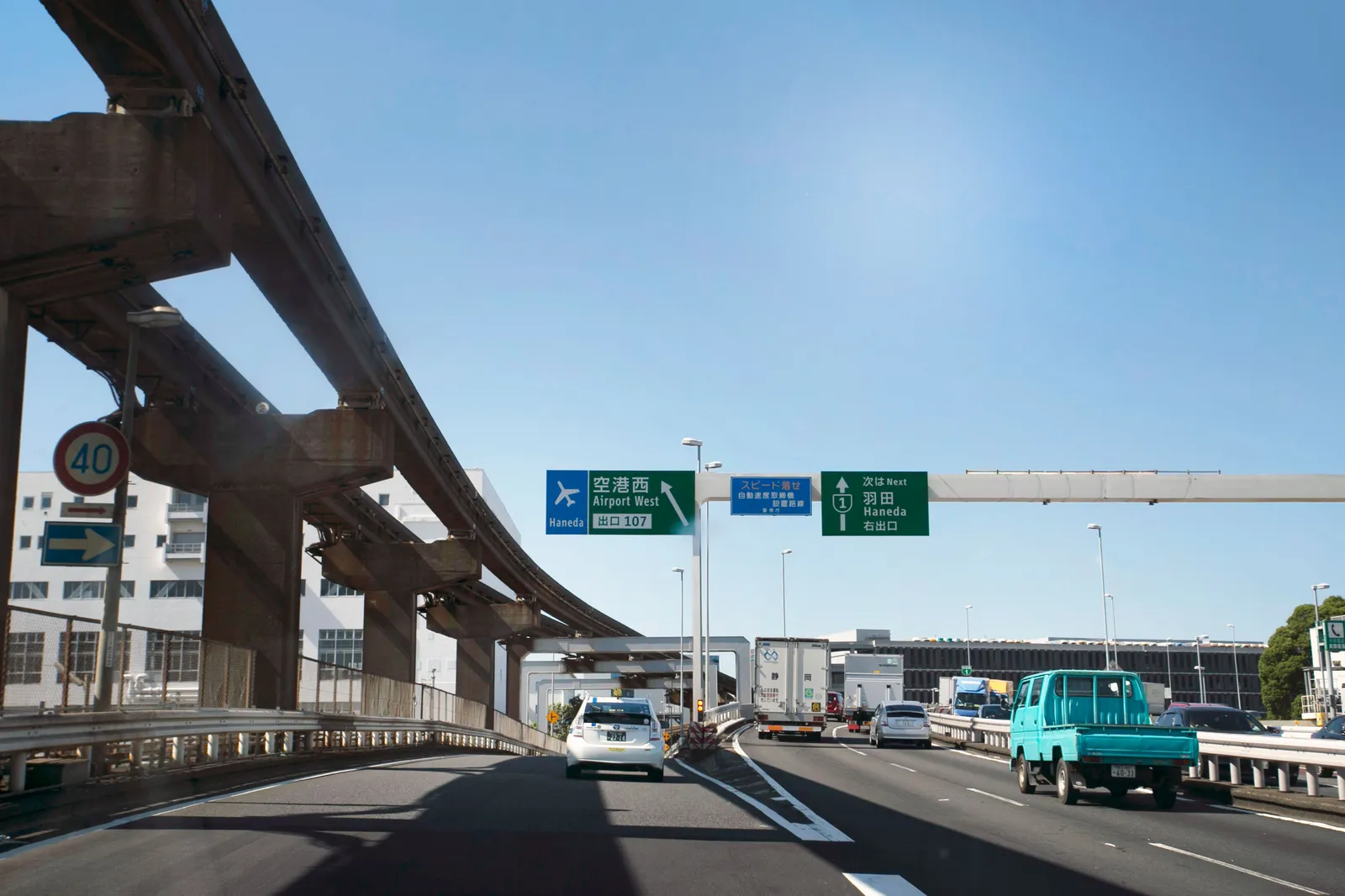
Drive on the left, steering wheel on the right: Same as Thailand, making it easy for Thai people to adapt
STOP signs (止まれ - Tomare): Inverted red triangles. If you see one, you must "come to a complete stop" and stop the wheels from turning. Count 1-2-3 before proceeding (Japanese police are very strict)
Traffic light signals: If green, you can go straight or turn left, but if you want to turn right, you must wait for oncoming traffic to pass, or wait for a green right-turn arrow signal to appear
Speed limits: In cities usually 40-50 km/h, on expressways approximately 80-100 km/h
No drinking and driving under any circumstances: Japanese law is the strictest. Even if you have just one sip of alcohol, you cannot touch the steering wheel under any circumstances. The penalty is imprisonment and a very high fine. Even passengers riding with you can be arrested
Advantages and Limitations of Renting a Car to Travel in Japan
Let's compare car rental with train travel to determine which format is suitable for your trip
Consideration Topic | Self-drive Car Rental | Train / Public Transportation |
Cost | Cost-effective when split among 3-4 people or more (includes fuel, expressway, parking fees) | Cost-effective for 1-2 people (many all-inclusive pass options available) |
Luggage | Can keep luggage in car all the time, no need to drag large suitcases up and down stairs | Inconvenient when carrying large suitcases and changing stations frequently |
Flexibility | Can stop anywhere you want without worrying about schedules | Must be precise about train times; missing a train can affect your entire day's plan |
Attraction Access | Can go anywhere, especially scenic viewpoints, mountains, and nature | Good access in major cities; outside cities must wait for buses that may run only a few times per day |
Fatigue | Driver bears the burden and gets tired from driving and finding parking | Everyone can rest and sleep on the train |
Frequently Asked Questions About Nippon Rent-A-Car (FAQ)
1. What is Nippon Rent-A-Car?
A leading car rental service provider in Japan with branches throughout the country, offering various car models with accessories for travelers.
2. Can Thais book and rent cars?
Of course. You only need a passport, credit card, and an international driving license according to the Geneva Convention 1949.
3. What documents need to be prepared?
Passport, Thai driving license, international driving license (Geneva 1949), car booking confirmation, and credit card.
4. Can you pick up and return the car at different branches?
Yes (One-Way Rental), but there will be additional fees depending on the distance between branches.
5. How much does Nippon Rent-A-Car cost?
Starting from approximately 7,000 yen per day for small cars (not including maximum insurance and add-ons), depending on season and car type.
6. What type of international driving license is required?
Geneva Convention 1949 (white cover booklet only).
7. Are there cars for families or multiple passengers?
Yes, such as Minivan class 7-8 seaters or larger vans. Should book well in advance as these are often fully booked quickly.
Who Nippon Rent-A-Car is Suitable For
Self-drive car rental with Nippon Rent-A-Car serves many different groups of tourists, especially:
Families with young children or elderly: No problem dragging large suitcases up and down train stairs, or being crowded during rush hours.
Those who like visiting secondary cities and nature: Hokkaido, Tohoku, Shikoku, or Kyushu - many beautiful places are difficult to access by train.
Groups of 3-5 friends: Renting one car and splitting costs is sometimes cheaper than buying multiple JR Passes.
(Conversely, if you mainly travel in major cities like Tokyo or Osaka, using subway trains will be more convenient and economical, as there are traffic jams and expensive parking in cities)
Conclusion: Self-Drive in Japan and Be Ready for a Safe and Fun Trip
Renting a car with Nippon Rent-A-Car is a worthwhile, safe choice that meets the top standards of Japan. The key is to prepare well in advance, especially for the international driving license (Geneva 1949) that must be checked for accuracy, choosing a car type suitable for the number of luggage items, and carefully studying Japan's traffic regulations.
Don't forget to add maximum coverage insurance for peace of mind. If you prepare well, your self-drive trip through Japan will be an unforgettable experience. It's recommended to check the latest details and conditions through the official Nippon Rent-A-Car website before booking, and you can find more travel ideas, travel tips, and articles about car rental and travel planning at MIDO Car Rental blog. Have a great trip!
About the author

Nattamon Khonngam
Online Marketing
Bachelor of Business Administration, Kasetsart University (2014-2018)
Master’s Degree in Marketing and Management, Western University (Current)
Online Marketer, specializing in Content Marketing, SEO & Digital Marketing
Skilled in AI, Data Analytics, Content Strategy & Digital Marketing